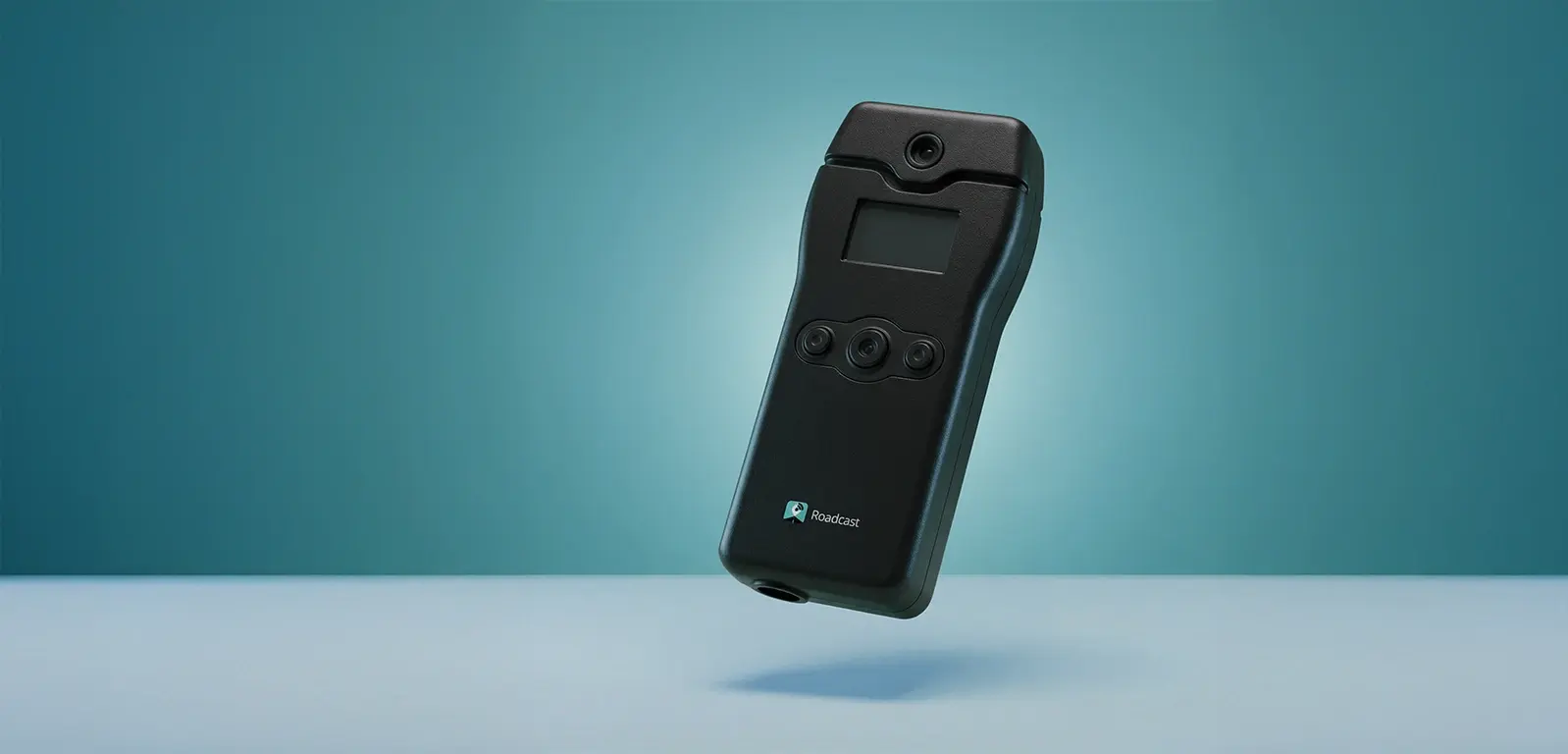
The future of fleet safety is prevention, not monitoring. By integrating breath analyzer checks into core fleet workflows, enterprises eliminate discretion and inconsistency. Every trip is authorized only after sobriety is verified—setting a new standard for driver safety compliance.
In large-scale fleet operations, driver behavior is one of the most critical operational risks—impacting not only road safety, but also brand reputation, regulatory compliance, and business continuity. While telematics and video systems help monitor driving behavior, the real challenge lies in preventing unsafe trips before they start. By embedding sobriety checks directly into trip authorization, attendance, and roster workflows, enterprises can shift from reactive monitoring to proactive, system-driven driver safety enforcement. Integrating an enterprise breath analyzer system into the core fleet workflow sets a new benchmark for fleet driver safety compliance. Replacing random spot checks with consistent, technology-led sobriety verification ensures that every trip begins with a sober, alert, and compliant driver.
Why Driver Sobriety Checks Are Critical for Large Fleets
The stakes for enterprise fleets—especially those transporting hazardous materials, high-value cargo, or passengers—are incredibly high. Traditional approaches—manual checks, supervisor discretion, or random testing—do not scale. They are inconsistent, prone to human error, and easy to bypass in distributed fleet environments.
For enterprises managing hundreds or thousands of drivers, without a systematic driver sobriety check fleet protocol, companies remain vulnerable to:
- Serious accidents or fatalities
- Legal liabilities and regulatory penalties
- Insurance escalations
- Loss of enterprise clients or contracts
- Long-term reputational damage
- Lapse in professionalism, compromising the overall safety culture of the organization.
An enterprise breath analyzer system, when integrated with digital fleet workflows, ensures that sobriety is verified every time, without exception.
Real-Time Breath Test Validation with Device + Application
Roadcast's Breath Analyzer solution is designed as a connected, real-time enforcement system, not a standalone device.
Here's how real-time validation works:
- The driver performs a breath test using a calibrated BA device
- Precision Sensing: High-grade fuel cell sensors in the BA device detect Alcohol Breath Concentration (BrAC) with medical-grade accuracy.
- Biometric or ID Verification: To prevent "proxy testing" (where someone else blows into the device), the system requires the driver to log in via the app or uses facial recognition during the test.
- Instant Data Sync: The reading is sent via Bluetooth or cellular connection to the cloud, providing the operations team with a real-time record of the test result, location, and timestamp.
By combining BA device integration with telematics, enterprises get a single source of truth for driver sobriety status—available instantly to fleet managers and safety teams.
Auto-Block Trips for Failed Tests
The true power of BA device integration telematics lies in its ability to take immediate, automated action. In an enterprise environment, a "failed" test shouldn't just trigger an email—it should stop the operation in its tracks.
Advanced FMS platforms can be configured to:
- Prevent Trip Start: If the BA reading exceeds the pre-defined safety threshold, the digital trip sheet remains locked.
- Immobilize the Vehicle: In some high-security integrations, the vehicle's ignition can be electronically disabled through the telematics unit until a "pass" result is recorded by an authorized supervisor.
- Escalation Alerts: Immediate SMS or App notifications are sent to the safety officer and the depot manager to ensure the driver is removed from duty and supported or disciplined according to company policy.
This ensures zero human discretion in critical safety decisions. No supervisor pressure. No last-minute overrides. No compliance gaps. For enterprises, this creates a defensible, audit-ready safety posture.
Attendance + Roster + Breath Reading Integration
Sobriety checks become significantly more effective when embedded into workforce workflows, not treated as standalone events. By integrating the Roadcast breath analyzer workflow with the enterprise's HR and Roster systems, the process becomes seamless:
- Clock-in via BA: A driver's daily attendance is only marked "Present" once they have successfully passed the sobriety test.
- Roster Sync: The system checks the driver's assigned route and vehicle. If the test is passed, the specific vehicle's GPS "un-mutes" and the trip data is pushed to the driver's mobile app.
This approach ensures:
- Every working shift begins with a validated sobriety check
- No "on-duty but unchecked" drivers
- Clear traceability between driver, shift, vehicle, and test result
For HR, operations, and compliance teams, this creates a single, unified safety workflow—reducing manual coordination and compliance blind spots. For long-haul or high-risk shifts, enterprises can mandate "Sign-off" tests to ensure sobriety was maintained throughout the operational hours.
Roadcast Breath Analyzer Workflow: Secure, Tamper-Proof & Scalable
Roadcast's breath analyzer workflow is built specifically for enterprise-scale deployment, where reliability and security are non-negotiable.
The Roadcast Advantage:
- Anti-Tamper Tech: The system uses a combination of photo-validation and pressure sensors to ensure that the breath sample is genuine and comes from the assigned driver.
- Scalable Fleet Management: Whether you have 50 or 5,000 drivers, the cloud-based dashboard allows safety teams to monitor compliance across multiple regions from a single screen.
- Offline Mode: Recognizing that connectivity can be an issue in remote yards, the device can store encrypted test results locally and sync them the moment a network is available, without compromising the "Auto-block" safety logic.
- Secure: All breath analyzer data is secured through end-to-end encrypted device-to-platform communication, ensuring readings cannot be intercepted or altered in transit. Access to this data is strictly controlled through role-based permissions for administrators and safety officers, preventing unauthorized use or visibility. Every test result is recorded in immutable, tamper-proof logs, creating a reliable audit trail that supports internal reviews, regulatory audits, and post-incident investigations.
Whether managing logistics fleets, mobility platforms, public transport, or enterprise delivery networks, Roadcast's BA device integration with telematics scales without compromising control.
Policy Recommendations for Enterprise Safety Teams
Technology alone is powerful—but its impact multiplies when paired with clear policy. For enterprises deploying breath analyzer systems, Roadcast recommends:
- Mandatory Test Before Every Shift or Trip
No exceptions, no overrides without documented escalation. - Zero-Tolerance Enforcement
Clearly communicate that the BA test is a mandatory safety protocol for every driver, every day. Transparency reduces friction and builds trust. Automatic trip blocking removes subjective decision-making. - Clear Escalation Protocols
Failed tests should trigger defined HR and safety actions. - Audit & Reporting Cadence
Weekly and monthly sobriety compliance reports for leadership. - Defined Thresholds: Set clear Blood Alcohol Concentration (BAC) limits in accordance with local laws and corporate risk appetite.
- Data Privacy: Ensure that health and sobriety data is stored securely and accessed only by authorized safety personnel to maintain compliance with data privacy regulations.
- Regular Calibration: Ensure all BA devices are on a strict maintenance schedule. A device out of calibration is a liability, not a safety tool.
Conclusion
Alcohol-related risk isn't a data challenge—it's an enforcement gap. By embedding breath analyzers into attendance, roster, and trip workflows, enterprises shift from passive monitoring to active prevention, ensuring trips are authorized responsibly. Roadcast's integrated breath analyzer workflow delivers consistent enforcement, enterprise-scale reliability, and regulatory defensibility—creating safer drivers, safer fleets, and safer roads for everyone.