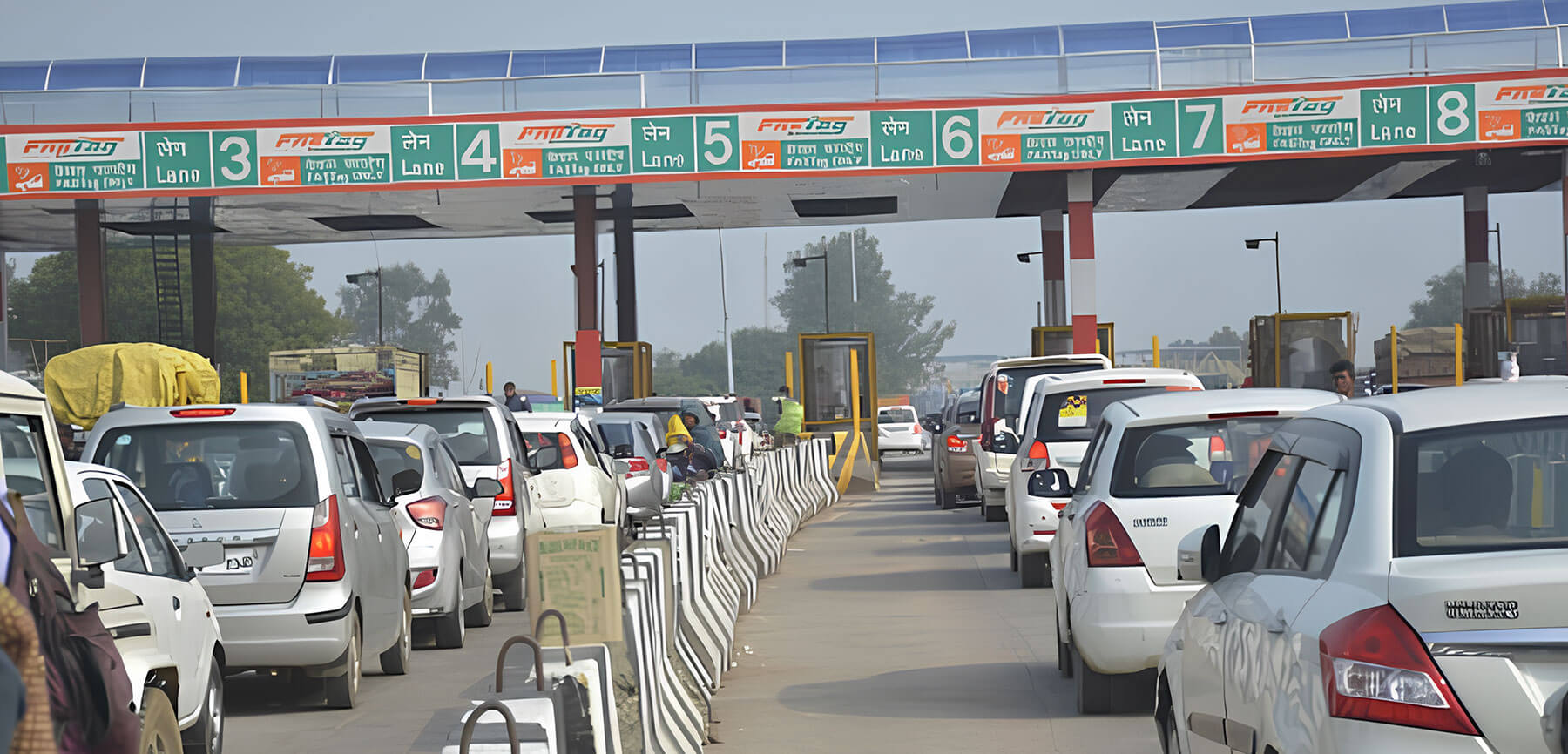
Traffic congestion is an everyday frustration—whether you're a commuter or a logistics manager. With over 295 million vehicles registered in India last year alone, cities like Bengaluru and Pune now rank among the world’s most congested. Amid growing vehicle volumes, one of the lesser-discussed contributors to highway congestion is the outdated model of physical toll booths.
How Physical Toll Booths Are Adding Fuel To Environmental Pollution
Physical toll booths have become a major choke point on highways. Long queues, constant honking, and slow-moving lines not only frustrate travelers but also disrupt the very purpose of highways—to enable seamless, high-speed travel. Every time a vehicle slows down for toll collection, it creates a ripple effect that leads to traffic jams stretching for miles.
Worse still, idling vehicles at toll plazas generate harmful emissions and waste enormous amounts of fuel. According to the U.S. Department of Energy, idling from heavy and light vehicles wastes 6 billion gallons of fuel annually. In India, road transportation is already responsible for 12% of total CO₂ emissions, making this a critical environmental concern.
A Digital Alternative: GPS-Based Tolling
With digital transformation sweeping every sector, toll systems are ripe for disruption. In February 2024, Union Minister Nitin Gadkari announced a GPS-based toll collection system using Global Navigation Satellite Systems (GNSS). This eliminates the need for physical toll plazas by charging vehicles based on the exact distance they travel.
The new system uses GPS trackers installed in vehicles to automatically calculate tolls, making transactions seamless and congestion-free. Countries like Germany and Russia have already adopted this model. In Germany, GPS tolling generated $6.5 billion in just the first two years and soared to $38.5 billion by 2014, all while significantly reducing congestion.
Smart Roads Need Smart Tech
India has the third-largest road network in the world, and while eliminating toll booths is a step forward, real impact lies in integrating smart infrastructure. Real-time vehicle tracking, digital payments, and traffic data analytics are central to this change.
Fleet operators, for example, can now use live toll data to optimize routes and avoid high-congestion periods. With predictive traffic insights, logistics managers can reschedule deliveries, improve fuel efficiency, and reduce transit time. The system benefits all—from passenger vehicles to freight carriers—by making highways more responsive and interconnected.
Environmental and Operational Gains
Beyond traffic management, the removal of toll booths will significantly cut down vehicle emissions and fuel waste. Frequent acceleration and deceleration at booths not only pollutes but also wears down vehicles faster. With a frictionless tolling system, highways will experience improved vehicle flow, less maintenance needs, and better air quality.
A Future Without Physical Toll Booths
Transitioning to GPS-based tolling comes with its own challenges—such as infrastructure investments, privacy concerns, and ensuring universal access. However, the long-term rewards far outweigh the initial roadblocks.
Imagine highways without bottlenecks, where deliveries reach on time, fuel is saved, and air quality improves. This isn’t a distant dream—it’s already happening. With the integration of advanced vehicle tracking, route optimization, and instant digital payments, the foundation for toll-booth-free highways is being laid today.
Moreover, the economic benefits are significant. According to Mr. Gadkari, GPS tolling is expected to boost toll revenues by over $100 billion, making it not just a smart move—but a profitable one too.
Conclusion
The removal of physical toll booths is more than just a tech upgrade—it’s a step toward a cleaner, faster, and more efficient transportation ecosystem. As India continues to build its infrastructure for the future, embracing digital toll collection could be the game-changer our highways urgently need.