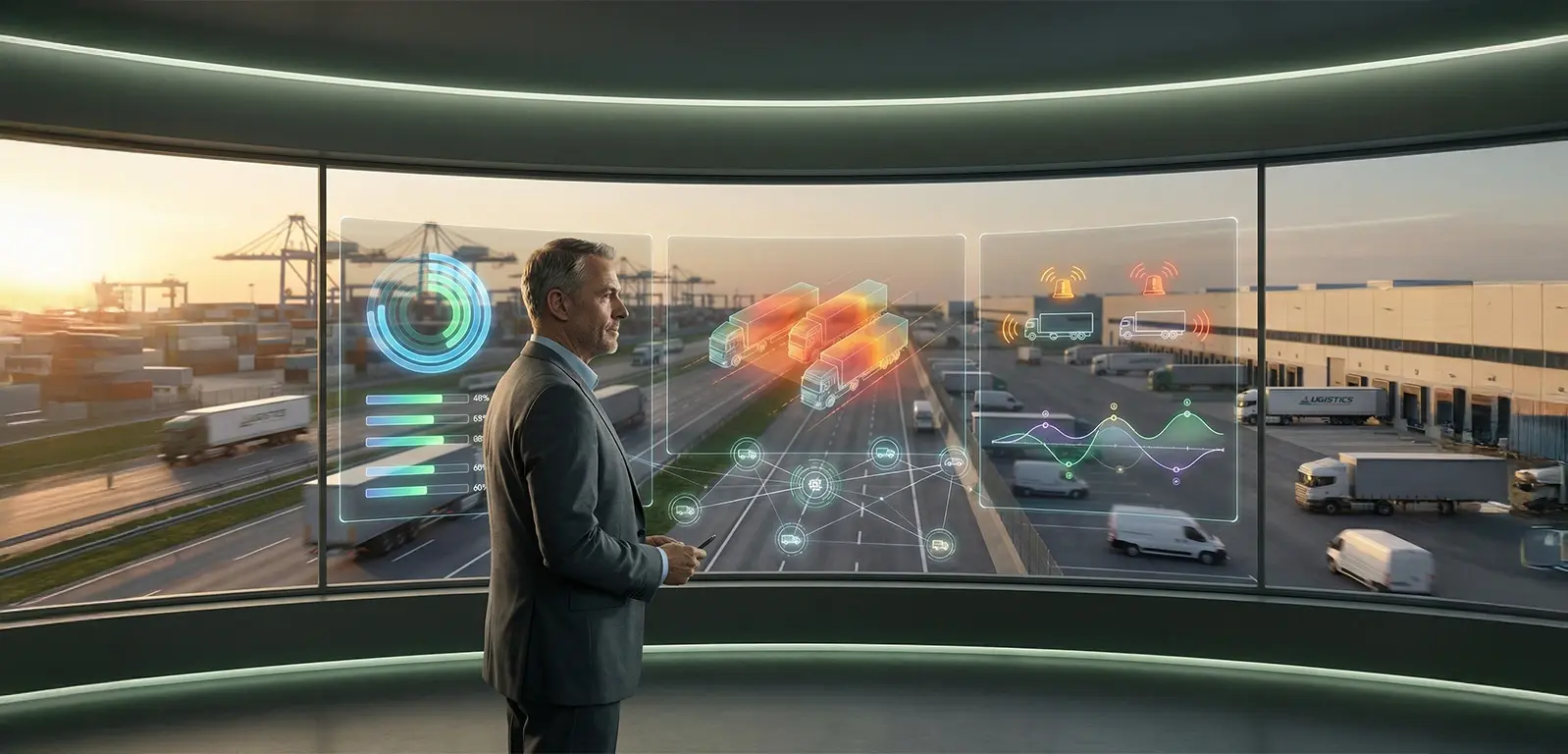
Most organizations track what’s easy to measure, not what truly drives profitability, safety, and scalability. This is why modern fleet KPIs for enterprise logistics must go beyond basic tracking and evolve into performance-driven intelligence.
In enterprise logistics, fleets generate enormous volumes of data every day—vehicle movements, fuel consumption, driver behavior, and delivery timelines. Yet many leaders still struggle to answer a basic question: Are our operations actually improving? The issue isn’t data scarcity, but a lack of focus on the right fleet KPIs. In 2026, the gap between high-performing and struggling logistics networks isn’t the quality of trucks—it’s the precision of the analytics behind them. While basic metrics show what happened, advanced fleet performance metrics explain why. These KPIs mark the shift from monitoring to enterprise fleet reporting and if your logistics dashboards don’t track them, you’re likely leaving 10–15% efficiency unrealized.
Vehicle Utilisation vs Availability
One of the most misunderstood fleet performance metrics is the difference between vehicle availability and vehicle utilisation.
- Availability is a binary state: Is the truck ready to work?
- Utilization is an efficiency state: Is the truck actually working to its full capacity?
Many enterprises proudly report high availability numbers, yet suffer from low utilisation. Vehicles may be technically available but idle for large portions of the day due to poor route planning, uneven demand distribution, or inefficient scheduling.
Tracking utilisation reveals:
- Underused assets
- Excess fleet size
- Capital tied up without returns
Without utilisation-focused KPIs, fleets continue to invest in new vehicles instead of optimizing existing ones—directly impacting ROI.
Cost per KM vs Cost per Order
Cost per kilometer is one of the most commonly tracked fleet metrics—and one of the most misleading when used in isolation. While cost per km highlights fuel efficiency and vehicle wear, it fails to capture business context. Two routes with the same cost per km can have vastly different profitability depending on:
- Number of orders served
- Drop density
- Service complexity
- Return loads
This is where cost per order becomes critical. Cost per order helps fleet leaders understand:
- True customer-level profitability
- Which routes or clients are margin-draining
- Whether pricing aligns with operational effort
If your Cost per KM is low but your Cost per Order is high, you are likely running "light loads" or inefficient routes. In 2026, the most profitable fleets optimize for Drop Density, ensuring that every kilometer driven is amortized across the maximum number of revenue-generating orders.
Driver Risk Scoring
Driver behavior is one of the biggest hidden variables in fleet performance—and one of the least consistently measured. Most fleets react to incidents: Accidents, Complaints, Insurance claims. Few proactively manage driver risk.
Driver risk scoring aggregates multiple behavior indicators such as:
- Speeding frequency
- Harsh braking and acceleration
- Long driving hours without breaks
- Repeated violations or near-miss patterns
When tracked correctly, driver risk scoring enables:
- Preventive coaching instead of post-incident action
- Reduced accident rates
- Lower insurance exposure
- Improved safety culture
The reason most fleets don’t implement this KPI? It requires correlating multiple data streams, not just reading a single report. But for enterprises, this KPI directly impacts safety, brand reputation, and compliance. Don't just use scores to punish. The best organizations use high scores to gamify performance, offering bonuses to the top 10% of "low-risk" drivers.
Fuel Variance & Idling Loss
Fuel is often the second-largest operational cost after manpower. Yet many fleets track fuel consumption only at a surface level. Fuel variance measures the gap between expected fuel consumption (based on route, load, and distance) and actual fuel consumed.
This KPI highlights:
- Fuel theft
- Inefficient driving patterns
- Route-level inefficiencies
Alongside fuel variance, idling loss is a silent margin killer. Excessive idling increases fuel burn, accelerates engine wear, and inflates emissions—without adding any operational value. Enterprises that fail to track idling loss often underestimate fuel wastage by double-digit percentages. Advanced logistics operations dashboards bring these inefficiencies to the surface, enabling targeted corrective actions. The KPI to Track: Fuel Efficiency Gap. This measures the delta between your "Best Driver" and "Worst Driver" on the same route. Closing this gap through targeted coaching often provides a 5–8% instant boost to the bottom line.
Yard Dwell Time & Turnaround
While fleets focus heavily on vehicles on the road, a significant amount of inefficiency happens inside yards, depots, and loading points. Yard dwell time measures how long a vehicle stays idle at warehouses, distribution centers, or customer premises.
Excessive dwell time indicates:
- Bottlenecks in loading/unloading
- Poor dock scheduling
- Manual process delays
Closely linked is turnaround time, which reflects how quickly a vehicle completes a full operational cycle and is ready for the next assignment. Ignoring yard KPIs leads to fewer trips per vehicle per day, artificial fleet expansion, and missed delivery windows.
For high-volume enterprises, improving yard turnaround often delivers faster gains than optimizing highway routes. If a driver is stuck in your yard for 90 minutes due to "paperwork delays," that is a 90-minute loss of their legal Hours of Service (HOS). High dwell times lead to "detention charges" and frustrated drivers, which are the primary drivers of 2026's rising turnover rates.
Why Most Enterprises Don’t Track These KPIs
Despite their importance, these KPIs are often missing because:
- Data lives in silos (GPS, fuel, ERP, HR)
- Reporting focuses on activity, not performance
- Dashboards are built for operators, not decision-makers
- KPIs aren’t tied to financial or safety outcomes
This is where modern fleet performance metrics and enterprise fleet reporting platforms make the difference—by unifying data and translating it into business-relevant insights.
From Metrics to Management
Tracking KPIs alone doesn’t create value. Value comes from monitoring trends, not one-off numbers; comparing performance across routes, regions, and time periods; and linking KPIs to accountability and action. The most effective fleet leaders don’t ask, “Where are my vehicles?” They ask, “Which KPIs are improving—and which ones are holding us back?”
Conclusion
As logistics operations grow in scale and complexity, enterprise fleets can no longer rely on basic tracking or generic reports. Competitive advantage now comes from mastering the KPIs that truly reflect operational health—utilisation, cost efficiency, driver risk, fuel discipline, and yard performance. The enterprises that win won’t be the ones with the most dashboards, but the ones with the right fleet KPIs—and the discipline to act on them.