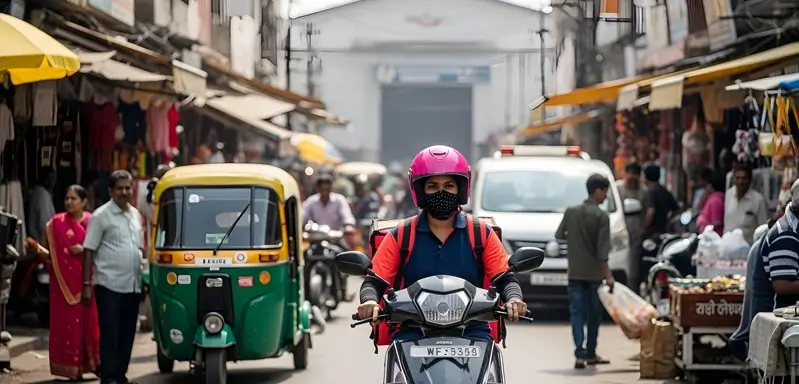
India’s economic narrative is undergoing a profound transformation, shifting its gaze from the bustling metros to the burgeoning Tier 2 and Tier 3 cities. These emerging urban centers, once overlooked, are rapidly becoming powerhouses of consumption and investment, driven by rising disposable incomes, increasing internet penetration, and significant government-led infrastructure development. This seismic shift has profound implications for the logistics sector, positioning India’s smaller cities as the new battleground for smart delivery solutions. Businesses are recognizing the immense, untapped potential in Tier 2 and 3 cities, which currently contribute around 35% to India's e-commerce market and are projected to reach 50% by 2026. This growth is fueled by a confluence of factors:
- Rising Purchasing Power: As economic development permeates smaller towns, the disposable income and aspirations of their residents are growing, leading to an increased demand for diverse products and convenient services.
- Digital Revolution: The burgeoning usage of smartphones with cheaper internet data has brought millions of new users online in these cities, eager to embrace e-commerce and digital services.
- Lower Operational Costs: Compared to metros, Tier 2 and 3 cities offer significantly more affordable land and labor, making them attractive for setting up warehouses and distribution centers closer to the end consumer.
- Government Initiatives: Visionary government programs like the Smart Cities Mission, PM Gati Shakti, and AMRUT (Atal Mission for Rejuvenation and Urban Transformation) are revolutionizing urban infrastructure, improving connectivity, and attracting investments. The Urban Infrastructure Development Fund (UIDF), with an annual allocation of ₹10,000 crore, is specifically bolstering infrastructure in hundreds of Tier 2 and 3 cities.
This shift presents both immense opportunities and unique challenges for smart delivery.
Opportunities in the Emerging Markets:
- Untapped Market Potential: Many products and services are still not widely available in smaller cities, offering first-mover advantages for businesses that can establish efficient delivery networks.
- Hyperlocal Delivery Growth: The demand for faster delivery is paramount. Hyperlocal models, leveraging existing local stores (Kirana-tech) and a thriving gig economy, are proving highly successful in catering to immediate needs and bypassing the need for large, centralized fulfillment infrastructure.
- Decentralized Warehousing: The rollout of GST has enabled a hub-and-spoke model, encouraging the creation of multiple regional warehouse hubs. Companies are establishing smaller, strategically located warehouses within Tier 2 and 3 cities to enhance delivery speed and efficiency.
- Technological Adoption: The less congested environments of Tier 2 and 3 cities offer fertile ground for piloting and scaling advanced logistics technologies. AI-driven route optimization, real-time tracking, and mobile apps are making delivery more efficient. There's also significant potential for the adoption of electric vehicles (EVs) for last-mile delivery and even drone technology in less congested areas.
- Employment Generation: The expansion of logistics operations in these cities creates significant employment opportunities for the local workforce, contributing to regional economic growth.
Challenges on the Battleground:
- Infrastructure Gaps: Despite government initiatives, some remote Tier 3 areas still grapple with inconsistent internet connectivity and less developed road infrastructure, posing hurdles for seamless digital integration and efficient movement of goods.
- Addressing Local Nuances: Understanding diverse local needs, cultural preferences, and consumer behavior is crucial. A "one-size-fits-all" approach that works in metros might not be effective in smaller cities.
- Talent Availability and Training: While labor is more affordable, finding and training skilled logistics personnel, particularly those proficient in technology-driven solutions, can be a challenge.
- Building Trust and Returns Management: For new online shoppers, building trust and establishing efficient return and refund processes are essential for long-term success.
- Scalability and Standardization: As demand grows, ensuring scalable and standardized delivery operations across a multitude of smaller cities, each with its unique characteristics, requires robust planning and technological solutions.
The Future of Smart Delivery in Tier 2 & 3 Cities:
- Infrastructure Gaps: Despite government initiatives, some remote Tier 3 areas still grapple with inconsistent internet connectivity and less developed road infrastructure, posing hurdles for seamless digital integration and efficient movement of goods.
- Addressing Local Nuances: Understanding diverse local needs, cultural preferences, and consumer behavior is crucial. A "one-size-fits-all" approach that works in metros might not be effective in smaller cities.
- Talent Availability and Training: While labor is more affordable, finding and training skilled logistics personnel, particularly those proficient in technology-driven solutions, can be a challenge.
- Building Trust and Returns Management: For new online shoppers, building trust and establishing efficient return and refund processes are essential for long-term success.
- Scalability and Standardization: As demand grows, ensuring scalable and standardized delivery operations across a multitude of smaller cities, each with its unique characteristics, requires robust planning and technological solutions.
The Future of Smart Delivery in Tier 2 & 3 Cities:
The future of smart delivery in India’s Tier 2 and 3 cities will be characterized by a greater emphasis on:
- Integrated Logistics Platforms: Unified Logistics Interface Platform (ULIP) and similar initiatives will facilitate data integration and real-time tracking across the supply chain, enabling greater efficiency.
- Technological Integration: AI and Machine Learning will be crucial for predictive analytics, inventory management, and hyper-optimized route planning. IoT will enable real-time tracking and secure handling of packages.
- Sustainable Logistics: The adoption of electric vehicles, solar-powered warehouses, and eco-friendly packaging will be vital for reducing carbon footprints and promoting sustainable practices.
- Micro-fulfillment Centers: Strategically placed smaller warehouses within cities will reduce delivery distances, significantly speeding up last-mile operations.
- Public-Private Partnerships (PPPs): Collaboration between government bodies and private logistics players will be key to developing robust infrastructure and innovative delivery solutions.
India's Tier 2 and 3 cities are not just an alternative; they are the primary growth corridors for the logistics sector. The "new battleground" for smart delivery is ripe with opportunities for innovation, investment, and ultimately, a more equitable and efficient distribution of goods across the nation. Businesses that can adapt, innovate, and integrate with the unique dynamics of these emerging markets will undoubtedly be the champions of India's evolving consumption story.