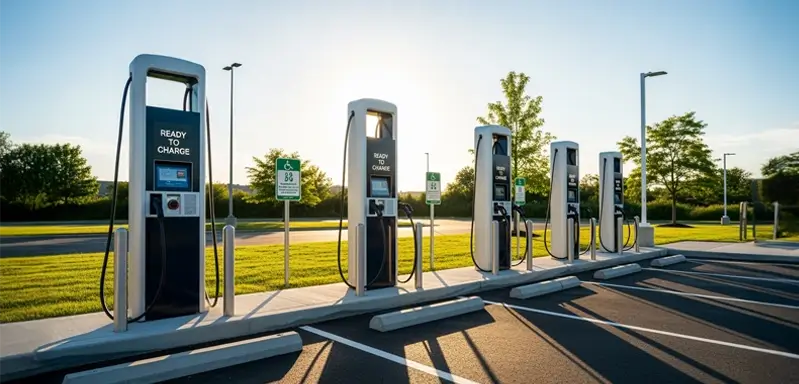
The future of electric mobility hinges on a concept far more sophisticated than simply plugging in a car: intelligent energy management. This is where Artificial Intelligence (AI) takes the wheel, revolutionizing both the user experience and the entire energy ecosystem. By leveraging AI, the challenges of EV charging and route planning are being transformed from major barriers into seamless, efficient processes. As electric vehicles (EVs) rapidly gain traction worldwide, managing their energy efficiently has become a pivotal challenge and opportunity for urban planners, automotive manufacturers, and technology providers alike.
Let's explore the critical role AI plays in transforming EV charging infrastructure and route planning, highlighting innovations, benefits, challenges, and future directions.
The Growing Demand for Smarter EV Energy Management
The global EV market is booming, propelled by environmental concerns, government incentives, and advances in battery technology. However, the transition to electric mobility brings complex demands:
- Charging infrastructure needs: EVs require widespread, reliable, and fast charging stations to match the convenience of traditional refueling.
- Battery range constraints: Limited range and charging times raise "range anxiety," potentially hindering consumer adoption.
- Grid impact: Large-scale EV charging can stress power grids, especially during peak hours.
- Route optimization: Efficient route planning is essential to balance energy use, time, and convenience.
To address these challenges, EV energy management must be dynamic, responsive, and data-driven—an ideal problem for AI solutions.
AI in EV Charging: Smarter, Faster, and Greener
1. Predictive Charging Scheduling
AI leverages historical usage, traffic, and weather data to predict optimal charging times and locations. By monitoring real-time energy demand and renewable supply, it intelligently recommends plugging in during off-peak hours or when solar power is abundant.
This predictive scheduling, incentivized by dynamic pricing, not only eases grid strain but also delivers tangible benefits:
- Reduces wait times by directing drivers to the least congested stations.
- Prevents grid overload by intelligently managing charging station loads.
- Lowers costs for consumers by scheduling charging during off-peak hours.
2. Dynamic Load Balancing and Smart Grid Integration
When multiple EVs fast-charge together, demand spikes. AI balances the load across vehicles, ensuring efficient charging without stressing the grid. Using predictive analytics, it also monitors station health—spotting wear or faults early and enabling proactive maintenance. The result: smoother operations, minimal downtime, and a more reliable charging network.
AI-powered energy management systems:
- Monitor real-time grid conditions.
- Adjust charging rates dynamically (smart charging) to prevent spikes.
- Prioritize charging based on urgency, battery level, and grid capacity.
- Integrate renewable energy sources (solar/wind) to supply cleaner power.
Smart charging reduces the risk of blackouts, optimizes renewable energy use, and lowers overall emissions.
3. Personalized Charging Experience
Beyond the grid, AI personalizes the charging experience for the driver. By learning individual charging habits, it can proactively recommend the best charging stations, estimate wait times, and even reserve a spot, turning a potential source of "range anxiety" into a stress-free part of the journey.
AI in Route Planning: Optimizing EV Travel
Unlike traditional vehicles, EVs must consider battery levels and charging station availability in real-time.
1. Energy-Efficient Routing
AI-driven navigation doesn't just find the shortest route; it finds the most energy-efficient one. It processes a multitude of factors in real time, including:
- Road Topography: Calculating the most efficient path by factoring in inclines and declines.
- Real-time Traffic: Rerouting to avoid congestion, which can be a major drain on EV batteries. Traffic jams, accidents, or unexpected road closures can waste energy and time. AI-powered systems update routes on the fly, suggesting alternate paths and charging stops to keep journeys smooth and efficient.
- Weather Conditions: Accounting for headwind, tailwind, and temperature, all of which affect battery performance.
This enables longer travel distances and better battery management, extending vehicle lifespan.
2. Integrated Charging Stops
The system seamlessly integrates charging stops into the route. It doesn't just show you nearby chargers; it intelligently selects the best one based on:
- Real-time Availability: It knows which chargers are currently in use, minimizing wait times.
- Charging Speed: It can prioritize high-speed chargers to get you back on the road faster.
- Cost and Amenities: It can suggest chargers with specific amenities (like a coffee shop or restaurant) or those with the most favorable pricing.
By analyzing all these variables, AI provides a far more accurate and dynamic estimate of your vehicle's range. This gives drivers a higher level of confidence in their journey, empowering them to drive without the constant fear of running out of power.
Benefits of AI-Driven Intelligent Energy Management
AI-driven intelligent energy management transforms EV charging into a smarter, seamless experience by reducing wait times, personalizing charging schedules, and guiding stress-free routes. It ensures grid stability through load balancing, prevents peak overloads, and optimizes charging during off-peak hours or when renewable energy is abundant—cutting costs for users while promoting sustainability. By maximizing renewable usage and reducing carbon emissions, it supports a greener future. At the same time, efficient battery management extends vehicle life, and predictive maintenance minimizes charging station downtime, delivering higher operational efficiency and a reliable charging network overall.
Challenges and Considerations
Despite its promise, AI integration in EV energy management faces hurdles:
- Data Privacy and Security: AI systems require extensive user and grid data, raising privacy concerns.
- Infrastructure Gaps: Uneven charging infrastructure availability limits AI's ability to optimize fully.
- Interoperability: Diverse charging protocols and vehicle types require standardized data-sharing frameworks.
- Cost of Implementation: Upgrading infrastructure and deploying AI solutions can be capital intensive.
- User Adoption: Drivers need to trust AI recommendations for it to be effective.
Addressing these challenges requires collaboration across governments, industries, and technology providers.
Future Trends: Where is AI-Led EV Energy Management Headed?
- Vehicle-to-Grid (V2G) Integration: EVs as mobile energy storage that can feed power back to the grid during peak demand, managed by AI.
- Autonomous EV Fleets: Self-driving EVs dynamically routed and charged by AI to optimize fleet utilization.
- AI-Powered Battery Health Management: Continuous monitoring and adaptive charging to extend battery life further.
- Blockchain and AI for Energy Trading: Secure peer-to-peer energy trading among EV owners coordinated by AI.
- Global AI Ecosystems: Cross-border data and infrastructure integration for seamless EV travel.
Conclusion
Artificial Intelligence is the linchpin of intelligent energy management in the rapidly evolving electric vehicle landscape. By transforming charging infrastructure into adaptive, efficient systems and enabling smart route planning tailored to EV needs, AI is addressing core challenges that hinder mass adoption.
For consumers, this means stress-free, cost-effective, and environmentally friendly driving experiences. For providers and cities, it translates to optimized resource use, grid resilience, and sustainable urban mobility.