Lane Departure Warning System: How It Works, Types & Benefits
As part of an effort to improve road safety around the country, the Ministry of Road Transport has released a public comment draft notice that requires the installation of new safety features on all new passenger cars carrying more than eight passengers, buses, and trucks. Lane departure alerts are amongst these new safety features.
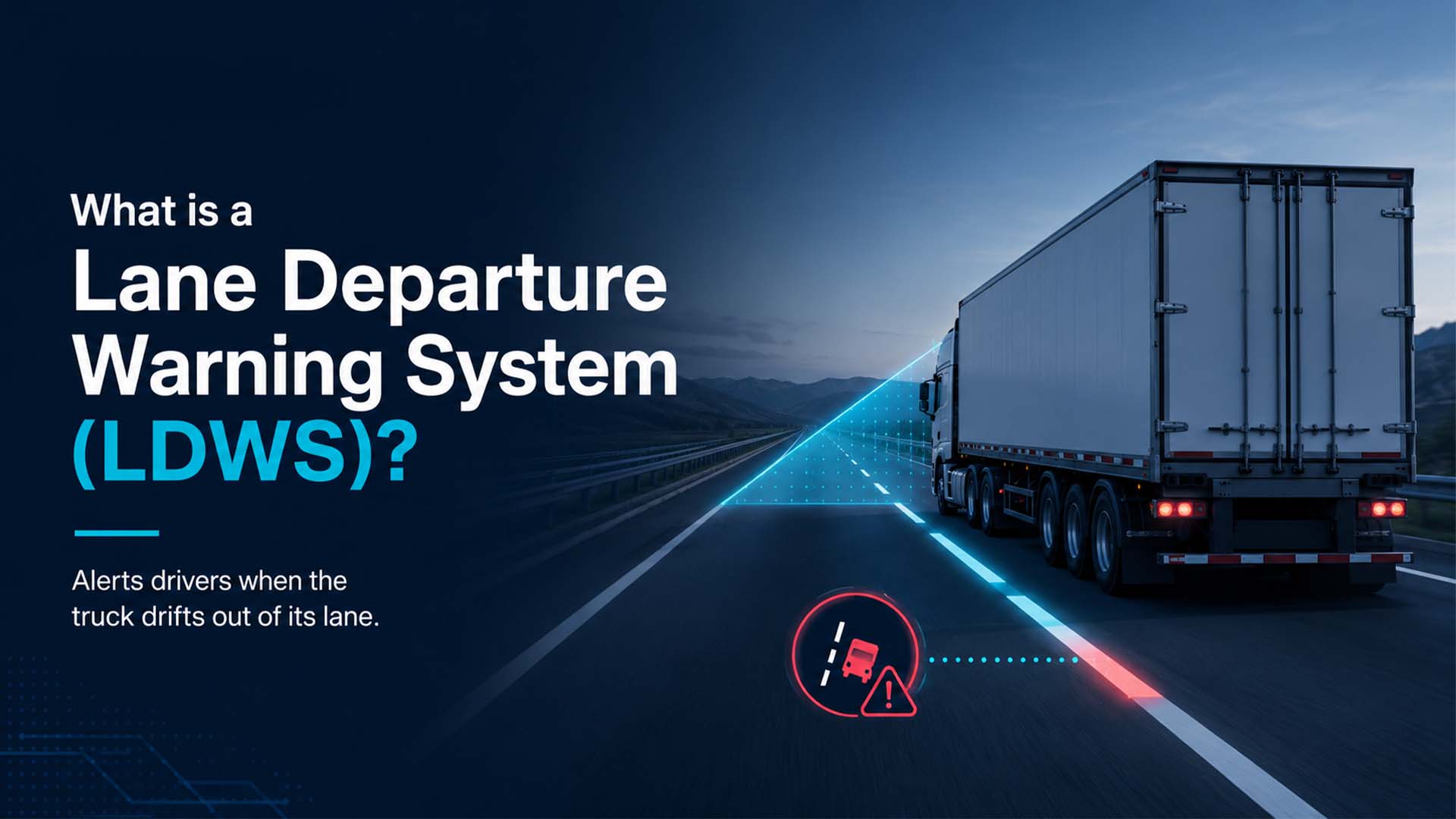
What is a Lane Departure Warning System (LDWS)?
Lane Departure Warning System (LDWS) is a camera-based warning system that helps truck drivers avoid unintended lane drifts. The system utilizes a camera mounted near the top center of the vehicle’s windshield to monitor and calculate the vehicle’s position within the lane. When LDWS detects the vehicle crossing lane markings without the turn signal being activated, the system sounds an audible warning. This alerts the driver to take corrective action to prevent potential collisions or run-off-road accidents.
How LDWS Technology Detects Lane Drift
The Lane Departure Warning System uses a camera mounted near the rearview mirror to determine lane markers. For the system to work properly, clearly visible paint stripes should be on the road.
Here is how LDWS works:
The core technology relies on forward-facing cameras or sensors that continuously monitor lane markings and the vehicle’s position relative to these markings. The camera’s lane detection algorithm records and classifies all common lane markings up to a distance of approximately 60 meters ahead. The system can distinguish between solid and dashed lines and different types of lane markings, such as yellow or white. When the system detects that the vehicle is very close to the left or right lane markings and the turn signal is off, it activates a warning signal, vibration, or sound. The camera captures real-time road images and identifies lane markings using image processing software.
MoRTH's LDWS Mandate — Compliance Timeline
As part of an effort to improve road safety across the country, the government has published new regulations that will require certain safety features on vehicles. From April 2026, some safety features will be mandatory on all new passenger vehicles for over eight people, buses, and lorries. The Ministry of Road Transport and Highways (MoRTH) has mandated the installation of Advanced Driver Assistance Systems (ADAS) for heavy commercial vehicles. The mandate comes into effect on October 1, 2027. From this date, all new heavy trucks and buses sold in the country must be equipped with these active safety features.
While the October 1, 2027, deadline applies to new models introduced after that date, the government has also laid out a roadmap for existing models. Vehicles already in production and on sale will need to be upgraded to meet these norms by April 2028.
The mandate focuses on active safety - systems that intervene before a crash happens rather than just protecting occupants after impact. The Lane Departure Warning System must be among the safety features.
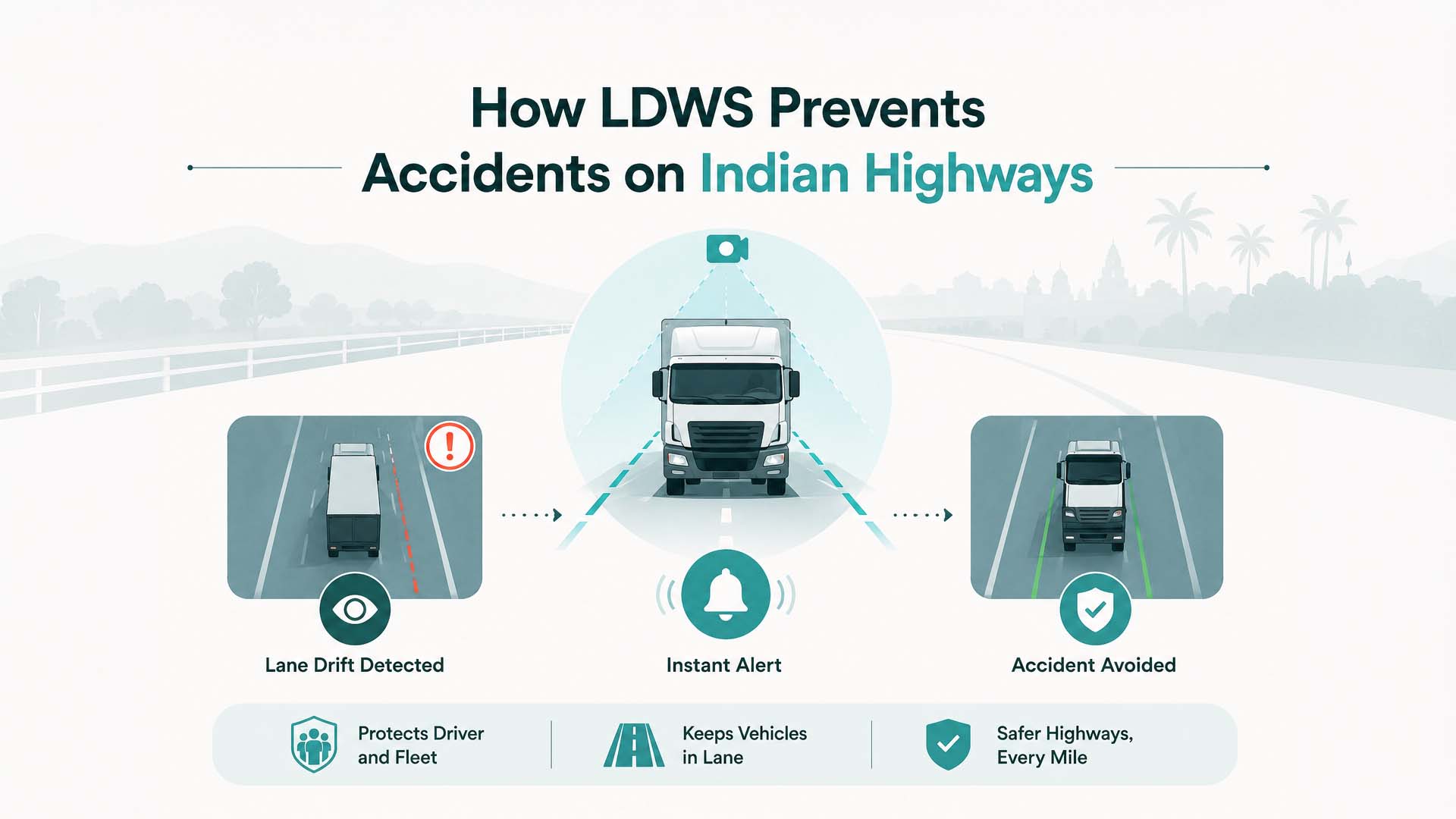
How LDWS Prevents Accidents on Indian Highways
The Lane Departure Warning System is a core ADAS feature that includes technologies that assist drivers with driving and parking functions, improving safety. Lane Departure Warning System helps prevent accidents on highways:
- Reduction in Lane Departure Accidents: This feature helps prevent crashes by warning you when you accidentally drift. It makes it less likely you'll hit other cars, things on the side of the road, or cars coming the other way.
- Enhanced Driver Awareness and Safety: LDWS reminds you to stay in your lane. This can help you focus more and be more alert, especially on long drives or when the road is boring and you might lose concentration.
- Lower Risk of Collisions with Other Vehicles: When you accidentally leave your lane, you can easily bump into other cars. LDWS helps reduce this risk by warning you.
- Added Support During Long Drives or Driver Fatigue: Long drives can make you tired, and tiredness can make you less alert. LDWS gives you an extra helping hand to stay in your lane when you might be feeling sleepy. This is a big help in preventing drowsy-driving accidents.
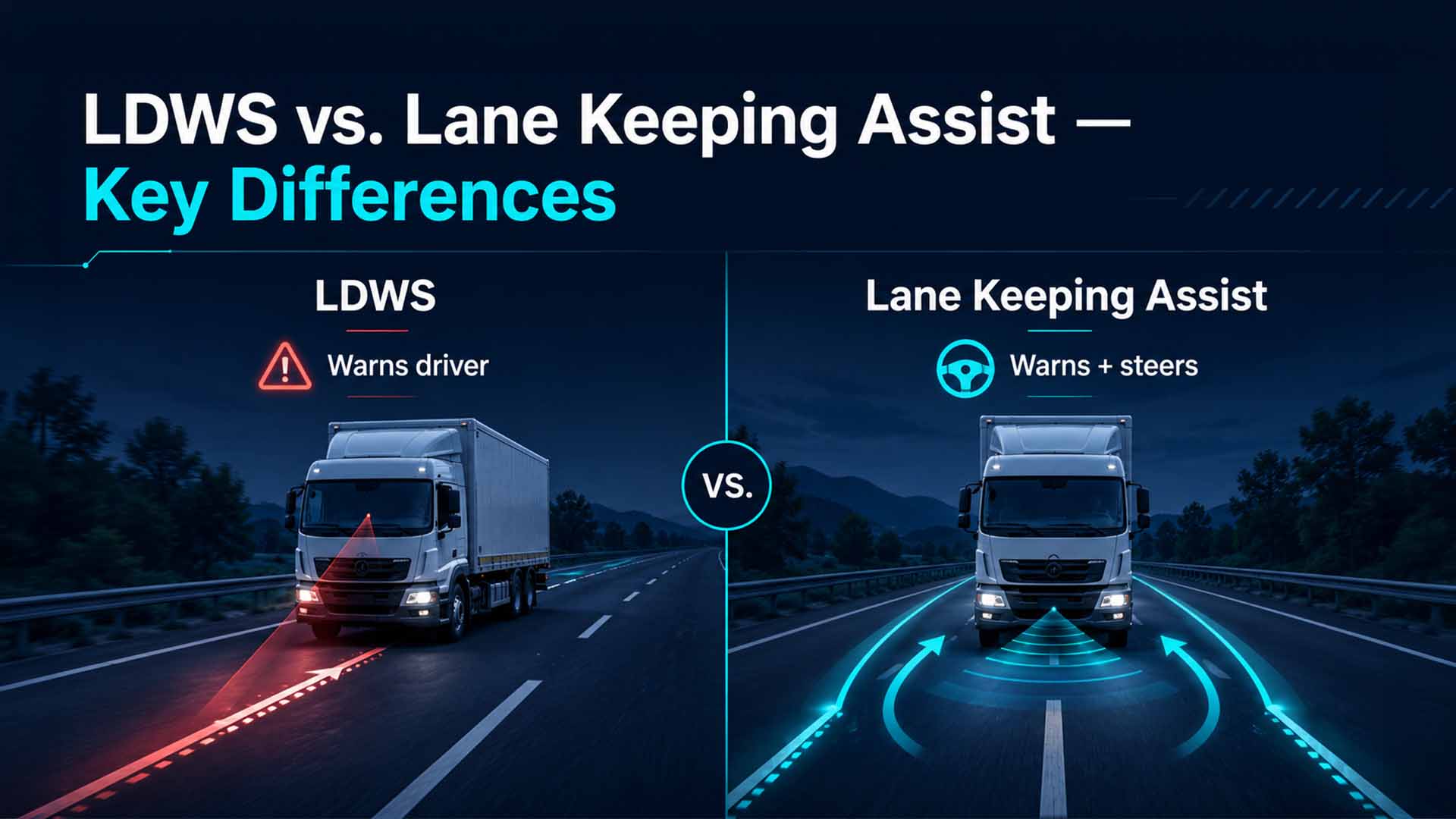
LDWS vs. Lane Keeping Assist — Key Differences
There are two similar but different systems: Lane Departure Warning and Lane Keeping Assist. Let's understand the difference:
- Lane Departure Warning (LDWS): This system warns you if you are drifting out of your lane. It doesn't do anything to steer the car itself. It just alerts you to take action.
- Lane Keeping Assist (LKA): This system does more. It not only warns you but also helps you stay in your lane by gently steering the car back if it senses you are drifting.
- When Each System is Useful: The LDWS system is helpful when you might get distracted for a moment or feel a little tired. It gives you a quick reminder to get back in your lane. LKA is even more helpful if you don't react quickly enough to the warning or if strong wind is pushing your car. It actively helps you stay in your lane, giving you extra support. So, the LDWS system just warns, while the LKA actively helps steer. Both are good for making driving safer.
What to Check When Buying an LDWS System
When evaluating a Lane Departure Warning System (LDWS)—whether built into a new/used vehicle or as an aftermarket addition—focus on these critical evaluation points to ensure maximum safety and usability:
- Warning Type (Haptic vs. Auditory): Systems alert drivers via beeps, visual flashes, or vibrating steering wheels/seats. Haptic alerts are widely preferred as they are less startling and translate immediately into muscle memory.
- Speed Activation Threshold: LDWS is typically designed for highways and is inactive at low, city-traffic speeds. Check the minimum activation speed (usually between 35 to 45 mph) to ensure it aligns with your daily commute.
- Sensor & Camera Quality: Ensure the system utilizes high-resolution sensors and that the front windshield camera is not obstructed by your rearview mirror setup. Some aftermarket models combine LDWS with forward-facing dash cams for added value.
- Turn Signal Override: A properly designed system does not trigger an alert or resist steering if you have engaged your turn signal to intentionally change lanes.
- Environmental Limitations: All camera-based systems struggle in extreme conditions, heavy rain, snow, or when road paint is faded. Always check user reviews to see how often the system displays "sensor blocked" or malfunction errors.
Roadcast LDWS — Designed for Indian Road Conditions
Roadcast’s Lane Departure Warning System (LDWS) is a camera-based warning system that helps truck drivers avoid unintended lane drifts. The system utilizes a camera mounted near the top center of the vehicle’s windshield to monitor and calculate the vehicle’s position within the lane. When LDWS detects the vehicle crossing lane markings without the turn signal being activated, the system sounds an audible warning. This alerts the driver to take corrective action to prevent potential collisions or run-off-road accidents. Every year, there are thousands of truck accidents caused by unintentional lane departure; 48% of these can be avoided if those trucks were equipped with lane departure warning systems.
FAQs on Lane Departure Warning
How does a Lane Departure Warning System work?
A Lane Departure Warning System (LDWS) utilizes a camera mounted near the top center of the vehicle’s windshield to monitor and calculate the vehicle’s position within the lane. When LDWS detects the vehicle crossing lane markings without the turn signal being activated, the system sounds an audible warning. This alerts the driver to take corrective action to prevent potential collisions or run-off-road accidents.
What types of vehicles can be equipped with LDWS?
LDWS is adaptable to different vehicle types, including cars, trucks, buses, and other commercial vehicles and can be customized to meet specific requirements.
How does LDWS contribute to road safety?
When the vehicle drifts out of its lane, a driver alert is triggered, helping reduce the risk of fatalities and injuries on the road. Usually, accidents are caused by driver fatigue, distraction, or loss of control.
Can LDWS be integrated with other safety features?
Yes, LDWS can be integrated with other advanced driver assistance systems (ADAS) to provide a comprehensive safety solution. This can include features like adaptive cruise control and automatic emergency braking.
Does LDWS work at night?
Yes, most LDWS systems are designed to work at night, using special technology to detect lane lines even in darkness. But very bad lighting might affect how well it works.
Does LDWS work on highways only?
LDWS is very helpful on highways, but it can also work on other roads with clear lane markings. However, it might not be as effective on roads with lots of curves or narrow lanes.
Is the Lane Departure Warning System worth it in India?
Yes, definitely! In India, with varying road conditions & sometimes tired drivers, it can be very helpful. It can prevent accidents caused by drifting out of lanes. It's a good safety feature to have for safer journeys for everyone in India.
Conclusion
The increasing volume of automotive traffic requires a higher level of traffic safety. In recent years, road traffic accidents rank fifth among the top ten causes of death in India. Over the last few decades, considerable effort has been made to develop intelligent driving assistance systems to prevent accidents. A lane departure warning system alerts the driver when an unintentional lane departure is imminent. The lane departure warning system monitors the vehicle's position relative to the boundary. When the vehicle is at risk of unintentionally leaving its lane, for example, when the driver is not paying full attention to the road ahead, the system delivers a warning to the driver. An important component of a driver assistance system is the evaluation of image sequences recorded by a real-time camera mounted on a moving vehicle. The sequence of images provides information about the automotive environment that must be analyzed to support the driver.
Intelligent Driving Assistance Systems are now a necessity and not a choice. Roadcast is at the forefront of such technology.