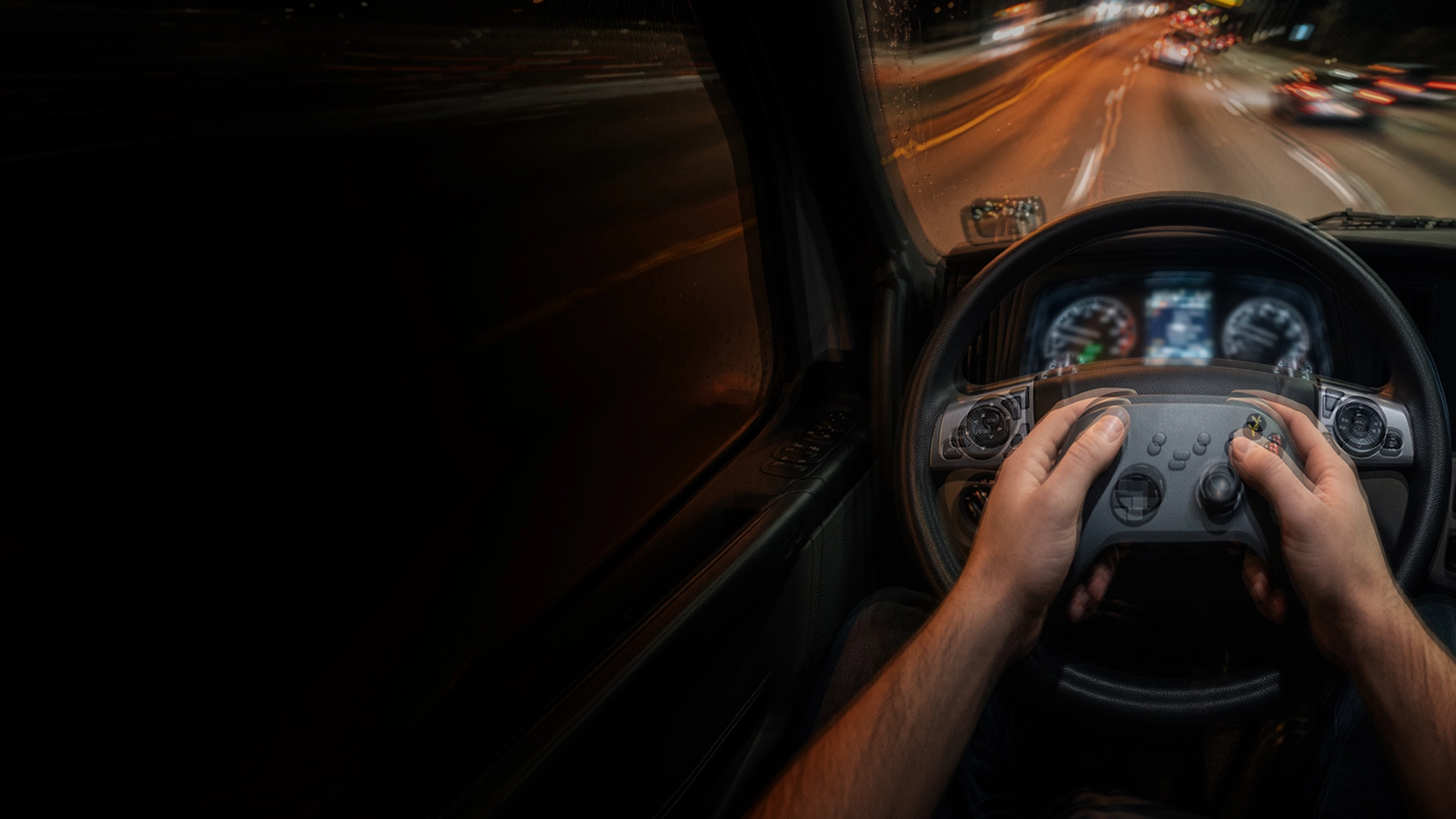
Night driving perspective
CONTROL KA 'BHRAM'

The Most Dangerous
Driver Is the One Who
Thinks He's Fine.

Alcohol creates a dangerous illusion: the belief that you are alert enough to drive. In reality, your reflexes slow, your focus weakens, and your decisions become unreliable. That feeling of control is not proof that you can drive safely — it is often the first warning that you cannot.

Think you can drive drunk? Prove yourself wrong.
A 2-minute simulation. A lifetime of a reality check.

Automated Breath Analyser for Fleet Drivers -
Zero Tolerance, Total Compliance

It is critical that law enforcement agencies, drivers, and employers ensure that individuals are not under the influence of alcohol when operating vehicles.

Request Demo
Roadcast fuel monitoring solution providing real-time fuel level tracking, theft detection, and consumption analysis for fleet optimization

The statistics of drunk driving, is a sobering thought!

A survey by a non-profit organization, Community Against Drunken Driving (CADD), in 2024 claimed that a whopping 81.2% of the 30,000 respondents in Delhi admitted to having driven under the influence of alcohol. Drunk driving leads to the deaths of a large number of people every year in India, hovering around 2–3% of total road accident fatalities. A Breath Analyser is the most effective solution. It is device used to measure the alcohol concentration in a person’s breath, typically to determine their blood alcohol content (BAC).

Request Demo

‘Key’ feature

Ignition Interlock Devices (IIDs) are connected to breath analysers, preventing the vehicle from starting if alcohol is detected, even if there is no internet connection.

Request Demo

Roadcast fuel sensor technology delivering live data on fuel levels, refills, and consumption patterns to help improve fleet efficiency

Monitor your employees at the Workplace

A Breath Analyser will be connected to a touchscreen device, via Bluetooth, automatically. An app installed on the device then manages user authentication with facial recognition. The solution works for not just on-boarded employees but also ‘outsiders’ entering a workplace.

Request Demo

Integration with AI and Telematics

The enhanced monitoring capabilities of Video telematics systems when integrated with breath Analysers, can provide a comprehensive assessment of driver safety, highlighting any risky behavior such as alcohol consumption, alongside other factors such as speeding, lane changes, fatigue and distracted driving.

Request Demo

Breath Analyser: Your First Line of
Defence against Drunk Driving

The integrated breath analyzer helps prevent intoxicated driving, keeping your fleet, passengers, and roads protected.

Request Demo

Roadcast fuel monitoring sensors providing real-time tracking and analytics, enabling fleets to reduce fuel wastage, improve operational efficiency, and enhance security across vehicles and equipment

Say Cheers To Added Advantages

We monitor what matters the most with regards to your driver’s behaviour

Portable and Easy to Use

Compact handheld devices, easy to operate with minimal training

Non-Invasive

Ensures quick results without the need for blood or urine samples

Reports

Generates reports for analysis and action

Saved historic data

You can retrieve past data for analysis

Works in Offline mode also

Without internet connection too, it is operable

Cost saving

Reduced accident rates will qualify for lower insurance premiums

Request Demo

Frequently Asked Questions

A breath analyser can show whether a driver is above the legal alcohol limit, but it does not prove complete fitness to drive. It measures breath alcohol concentration (BrAC) and uses it to estimate blood alcohol content (BAC): alcohol in the blood passes into the air in the lungs, and the sensor reads it when the driver exhales. In fleets, it can be linked to the ignition so the vehicle will not start if alcohol is detected. It cannot detect fatigue, drugs or illness, so pair it with AI driver monitoring from our video telematics solution.
The legal limit in India is 0.03% BAC (30 mg of alcohol per 100 ml of blood), and it applies to all drivers, including commercial vehicle drivers. Under Section 185 of the Motor Vehicles Act, driving above this limit is an offence punishable by fines, imprisonment and licence disqualification. Driving under the influence of drugs to the point of losing control is also punishable. Many fleets set a stricter zero-tolerance internal policy and use breath analysers integrated into fleet management software to enforce it.
An Ignition Interlock Device (IID) is a breath analyser wired into a vehicle's ignition that stops the engine from starting if the driver's breath alcohol is above a preset limit, usually around 0.02-0.03% BAC. The driver must blow into the device before every start. A control module processes the result, a display alerts the driver to test results or required retests, and onboard storage logs breath tests, violations and tampering attempts so fleet managers can audit compliance.
Yes. Roadcast's breath analyser is built for businesses and works for non-vehicle alcohol checks at offices, factories, logistics hubs and warehouses. It connects by Bluetooth to a touchscreen device and can verify identity with facial recognition. It screens employees as well as visitors entering the premises, logs every test with the result and time, and generates historical reports, creating a compliance record for workplace safety audits and yard gate security.
Yes, a fleet breath analyser works without internet. It stores data on the device and connects to the vehicle's ignition or telematics unit by cable or Bluetooth. Driver authentication (RFID or facial recognition), breath analysis and engine immobilisation all happen locally, and the engine stays locked if the reading is above the legal limit. Each test is saved with its time, result and driver ID, then syncs automatically to the telematics dashboard when connectivity returns.
Yes. Breath analysers need regular calibration because their sensors drift with use, which makes readings inaccurate. Calibration adjusts the sensor, checks accuracy across several alcohol concentrations, tests functions and ends with a calibration certificate. As a general guide, professional units are calibrated at least once a year and personal units every 6 to 12 months, while heavily used fleet devices may need more frequent checks as per the manufacturer's guidance.