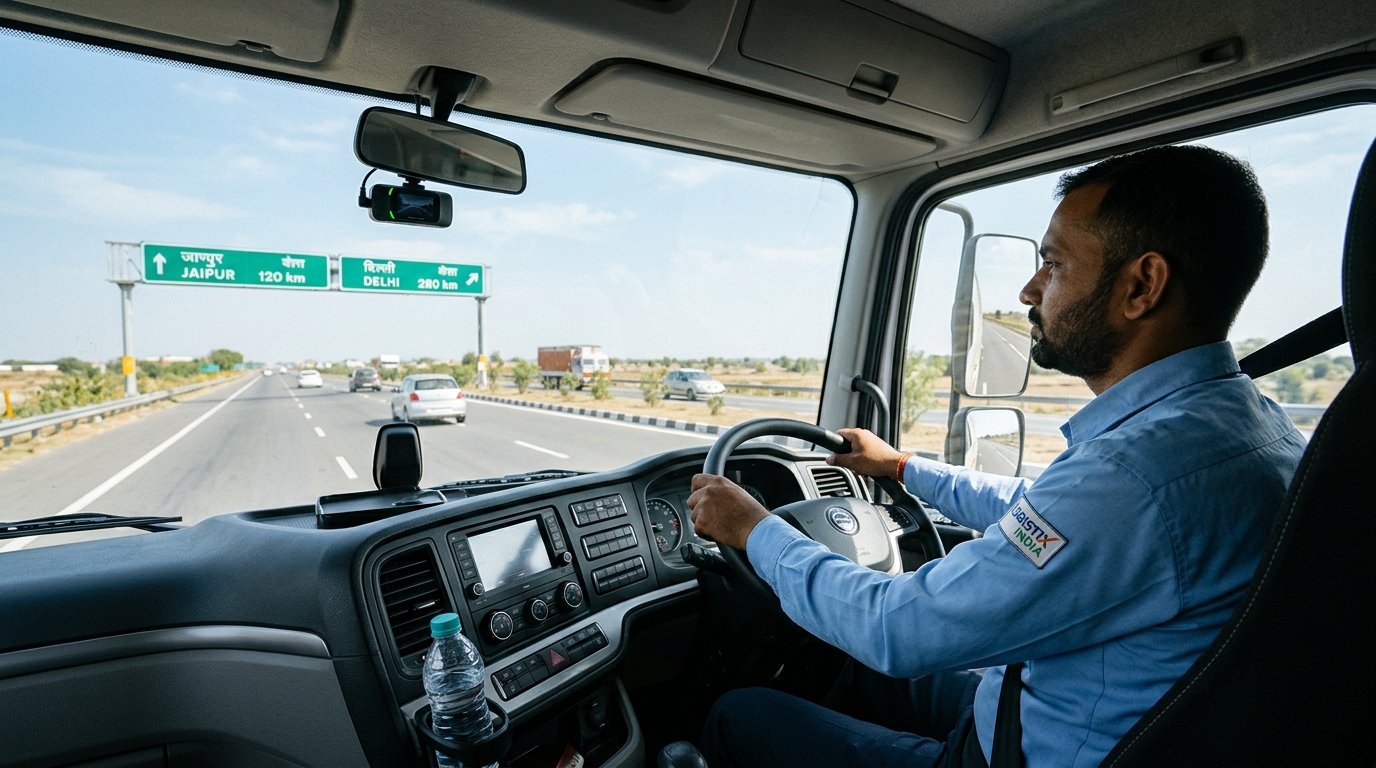
Every fleet that installs a driver-facing camera has to make two decisions. The first is what the technology will detect. The second is what it will mean to the driver sitting under that lens.
Fleet safety programmes tend to succeed or fail on trust more than on technology. Drivers who understand what is recorded, who can see it and why usually accept a driver monitoring system (DMS). Drivers who are left to guess often resist it, quietly or loudly.
India’s data protection law has now raised the bar. Under the Digital Personal Data Protection (DPDP) Act and the Rules notified in November 2025, a person’s face footage is personal data, so fleets are accountable for how they collect, use, store and delete their drivers’ footage (Source: PIB). Getting driver monitoring system privacy right is therefore a compliance requirement and a practical way to earn drivers’ trust and keep them in your fleet.
In this guide, you will learn what DMS cameras record, what the law expects, how to write an in-cab camera policy and how to introduce DMS without shaking driver trust.
In short
- • DMS cameras use AI to spot fatigue, distraction, phone use and similar risks, and save clips of critical events.
- • Under the DPDP Act, your fleet is responsible for protecting driver footage, so give clear notice and record consent or acknowledgement wherever possible.
- • A written in-cab camera policy should cover recording triggers, access, retention and driver rights.
- • Pilot first, train supervisors, reward safe driving and measure trust through surveys, grievances and alert accuracy.
What Do Driver Monitoring Cameras Record and How Do They Work?
A DMS pairs cameras, typically road-facing and cabin-facing, with AI that watches for unsafe behaviour such as fatigue, yawning, distraction, phone use, smoking and missing seatbelts. When it detects one, it saves a clip of the event for review. Roadcast’s AI dashcams record in 1080p and capture critical events automatically.
What matters for privacy is how you configure it. Decide whether footage is event-based or continuous, and if the device has a built-in microphone, state clearly how audio is used. Then tell your drivers.
Why Drivers Push Back on In-Cab Cameras
Drivers rarely object to safety. They object to a camera that tracks their every move, because it may affect their livelihood. The most common worries are:
-
•
“Will this be used to cut my pay or sack me?” Past experience with tracking tools may have taught drivers that data gets used to impose penalties.
-
•
“The cabin is my second home.” On long hauls, the cab is where a driver eats, rests, calls family and sometimes sleeps, so a lens pointed at that space can feel intrusive.
-
•
“Nobody told me anything.” Silence invites rumours, and the usual rumour is that the camera listens to every word and reports it to the owner.
-
•
“Machines make mistakes.” A false yawn alert followed by a scolding can turn a sceptical driver into an ex-driver.
None of these worries is irrational. They point to what your rollout must fix: purpose, boundaries, fairness and communication.
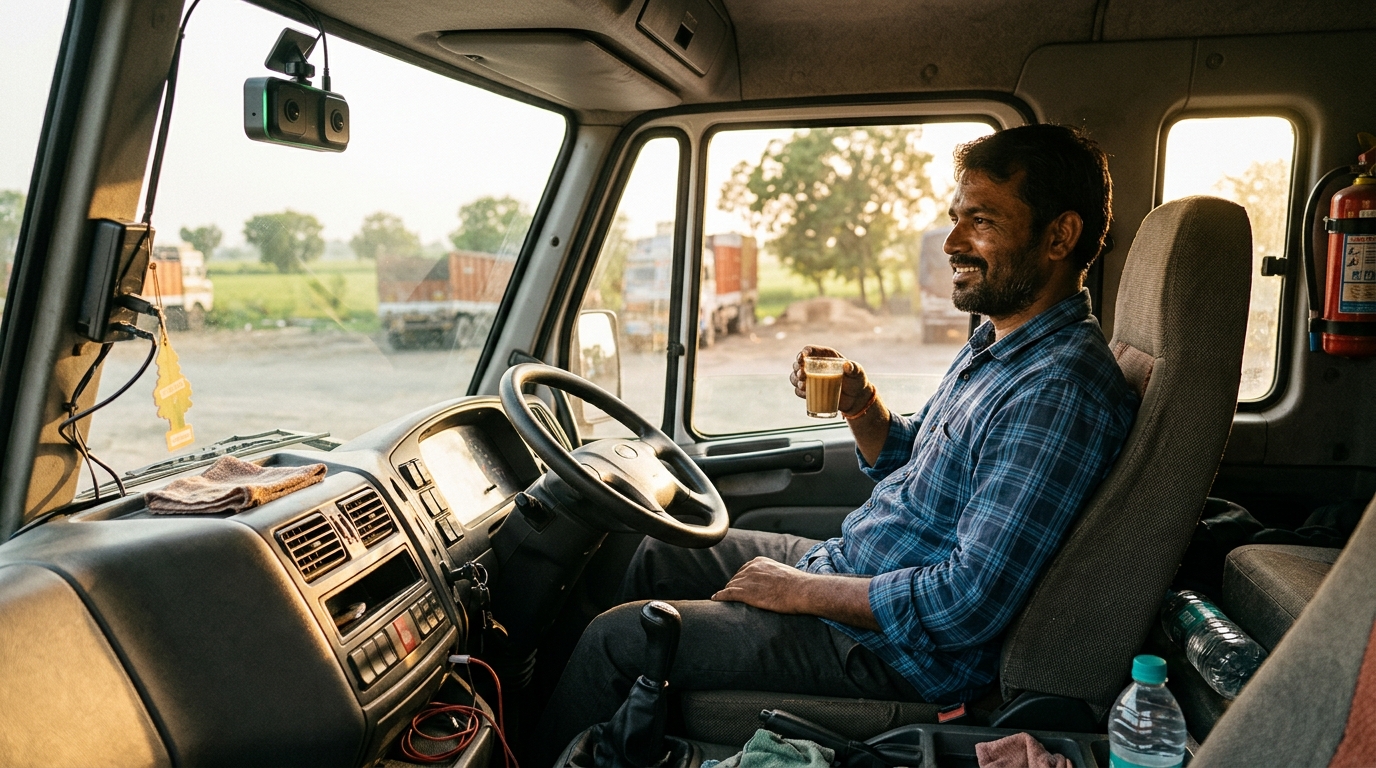
Modern dual-facing AI dashcams operate on event-based recording, safeguarding personal privacy inside the cabin during rest breaks while protecting drivers on active runs.
DPDP Act and Driver Privacy in India: What the Law Says
India’s Digital Personal Data Protection Act, 2023 and the DPDP Rules, 2025 are the backbone of driver privacy in India. Under this law, the picture is simple:
-
•
The driver owns their data (the Data Principal).
-
•
The driver’s face video is protected personal information.
-
•
Your fleet company is responsible for managing and protecting that data (the Data Fiduciary).
In other words, you are legally responsible for safeguarding your drivers’ video data. That is the DPDP Act fleet equation.
The Act recognises certain “legitimate uses”, including some employment-related purposes, where consent may not be the only lawful basis. However, many drivers are contractual, vendor-supplied or owner-operators, and not every situation fits neatly. The safest approach is to:
- Give clear notice;
- Record DMS consent or a signed acknowledgement wherever possible;
- Limit use to the stated purposes;
- Protect the data; and
- Honour drivers’ rights to information and grievance redressal.
Note: This is general information, not legal advice. Please run your final policy past a qualified lawyer before implementing DMS.

Fleet management teams must establish role-based access, strict encryption, and clear retention schedules under India's DPDP Act framework.
Five Principles of a Privacy-First DMS Rollout
1. Purpose First
Name the goal, such as reducing fatigue-related incidents, and do not use footage for unrelated reasons.
2. Collect Only What You Need
If a front and cabin view meets the purpose, do not add more.
3. Be Transparent
Drivers should know what is recorded, when and who sees it.
4. Keep Humans in the Loop
An alert is a prompt for a conversation, not a verdict. Hear the driver’s side before deciding anything.
5. Be Fair
The same rules apply to everyone, from the newest driver to the senior supervisor.
How to Write an In-Cab Camera Policy
A written in-cab camera policy turns good intentions into promises that drivers can hold you to. Here is a quick view of the basics:
| Policy element | What to spell out | Example |
|---|---|---|
| Recording trigger | Events and alerts that save footage | Fatigue, phone use, harsh braking, collision |
| Access | Named roles, with a reason logged for every view | Safety manager, regional head |
| Retention | Separate periods for routine and incident footage | Short for routine, longer until a case closes |
| Driver rights | Review, question and appeal | Right to view the clip and respond |
What is recorded, and when?
Explain which cameras exist (road-facing, cabin-facing and so on), what the AI looks for (fatigue, yawning, distraction, phone use, smoking, seatbelt compliance) and when clips are saved. State whether footage is event-based or continuous. If the device has a built-in microphone, say how audio is used.
Who can access footage from driver-facing cameras, and why?
List roles, not names, and state that footage is viewed only for safety coaching, incident investigation and dispute resolution. Clips are not forwarded on WhatsApp, and they are never shared for gossip or entertainment. Every access should have a reason that can be traced.
Retention, rights and grievances
Decide how long routine footage stays and when incident clips are deleted. Keep data only as long as the purpose needs it, in line with the DPDP Act’s approach. Give drivers a named person to approach, a response timeline and a way to correct a wrongly flagged event.
How Should Fleet Managers Introduce a Driver Monitoring System?
Here is a step-by-step communication plan for rolling out DMS across your fleet.
1. Before installation
Hold open sessions, not memos. Explain the “why” with real examples of fatigue-related close calls, tell drivers who can access footage from driver-facing cameras and let them ask uncomfortable questions. Then share the written policy, collect DMS consent or a signed acknowledgement and explain what the system will do.
2. Pilot, then scale
Start with one depot or a small group of volunteers and gather feedback weekly. Fix false alerts and unclear rules before going fleet-wide. Pilot drivers often become your best advocates when the rest of the team asks, “Is it really okay?”
3. Train and support
Walk drivers through every alert type and what it means. Show them their own data on a simple dashboard. Train supervisors too, because a harsh tone from one manager can undo months of effort. Keep a helpline open for complaints.
4. Reward the right behaviour
Flip the script. Recognise safe drivers, celebrate alert-free months and offer small incentives. When the first conversation after an alert is a friendly chat rather than a warning letter, trust grows quickly.

Transparent, data-backed driver coaching transforms safety cameras from perceived surveillance into a positive driver appreciation and reward programme.
Technical Settings That Protect Driver Privacy
Good policy needs matching configuration. Fleets using Roadcast can choose camera views, set custom alerts for specific unsafe behaviours and pick between front-only, dual or multi-channel setups. Review these settings:
-
•
Right-sized coverage: Pick the camera configuration that matches your safety goal.
-
•
Alert tuning: Switch on only the alerts you will act on, such as fatigue and distraction.
-
•
Audio decisions: The cameras have a built-in microphone and speaker for two-way calling, so decide when audio is used and write it down.
-
•
Access hygiene: Footage can be stored on the device or in the cloud and viewed through the web portal or mobile app. Restrict portal logins to named roles and review them regularly.
-
•
Driver safety features: The Q-wake seat vibration for drowsiness works for the driver, so highlight it during training.
To see the full setup, explore Roadcast’s AI dashcam and video telematics solutions, which work alongside your fleet management software.
How to Measure Driver Trust and DMS Adoption
You cannot improve trust without measuring it. Track these indicators:
-
•
Driver sentiment: A short anonymous survey every quarter.
-
•
Grievances: The number raised and the average time to resolve.
-
•
Alert accuracy: The share of alerts that drivers or reviewers call false.
-
•
Coaching outcomes: Whether alerts per thousand kilometres fall over time.
-
•
Tampering: Covered or disconnected cameras are a warning that trust is slipping.
-
•
Retention: Driver attrition before and after the rollout.
Review these monthly with driver representatives and publish what you find. For more on how enterprises combine cameras and data responsibly, read Roadcast’s guide on video telematics for large enterprises.
Conclusion
Driver monitoring works only when drivers believe in it, and belief is built by design, not by announcement. Fleets that treat driver monitoring system privacy as a core part of their safety programme win in the long run, because trust protects people on the road, and that in turn protects your business.
Frequently Asked Questions
What do driver monitoring cameras record?
They record road-facing and cabin-facing video and use AI to flag fatigue, yawning, distraction, phone use, smoking and seatbelt non-compliance. Clips of critical events are saved automatically. Whether footage is event-based or continuous, and how audio is used, depends on your configuration and policy.
Is it legal to install driver-facing cameras in trucks in India?
Generally, yes, provided you collect footage for a lawful purpose, give drivers clear notice and keep proper safeguards in place under the DPDP framework.
Do fleets need driver consent for DMS under the DPDP Act?
It depends on the driver’s relationship with the fleet and the lawful basis relied on. Some employment-related uses may not require consent, but contract and vendor drivers differ. Giving notice and taking a signed acknowledgement is the safer habit.
Who can access footage from driver-facing cameras?
Only named roles, such as a safety manager or regional head, and only for safety coaching, incident investigation and dispute resolution. Every access should have a logged reason.
Can DMS footage be used for disciplinary action?
Only if your policy says so in advance. Best practice is to train and inform the driver first, have a human review any clip, give the driver the right to respond and reserve discipline for serious or repeated safety violations.
Should DMS cameras record audio?
Not by default. Enable audio only where there is a clear need, such as two-way calling or emergencies, and state the rule in writing.
How long should DMS footage be retained?
Keep it only as long as the purpose requires. A common approach is a short period for routine footage and a longer one for incident clips until the matter is closed. Fix the periods with your legal team.
How should fleet managers explain DMS to drivers worried about surveillance?
Be honest and specific. Say it is about fatigue and distraction, show what is recorded, name who can view it, promise coaching before punishment and, most importantly, let drivers see their own data.