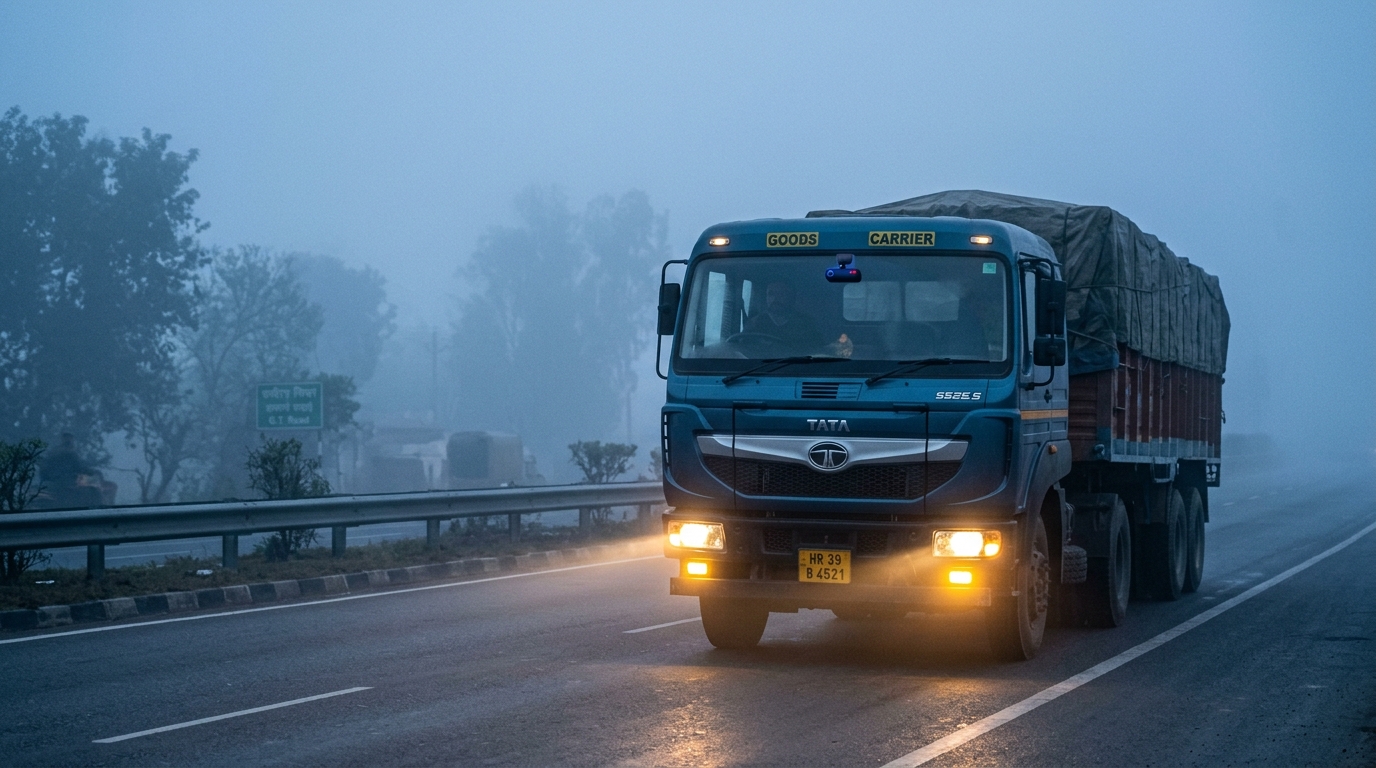
It is 4:30 on a January morning on a North Indian highway. The fog is so thick that the taillights ahead show up as a faint red smudge, road signs have vanished into the mist, and the driver is six hours into his shift, leaning towards the windscreen with wide eyes. On the dashboard, a small camera is quietly watching everything. Every fleet owner eventually asks the same question about that camera: will an AI dashcam in fog keep the driver and the vehicle safe?
The honest answer is yes, but not in every way. A dashcam can still record, monitor the driver and raise alerts, and it matters because the stakes are real. According to the Ministry of Road Transport and Highways (MoRTH), as reported by Deccan Herald, India recorded 34,262 road accidents in misty and foggy conditions in 2022, and 14,583 people lost their lives.
In this guide, you will learn what dashcams and ADAS can and cannot do in fog, how to handle lens fogging and what to ask vendors, so you can set fair expectations before fog season arrives.
In short
- • Dashcams keep recording, streaming and monitoring the driver in fog, but road-facing ADAS alerts become limited as fog thickens.
- • Camera-based ADAS sees roughly the way a good driver sees. When visibility drops for the driver, it drops for the optical lens too.
- • The in-cab camera is unaffected by external fog, so DMS fatigue detection and Q-Wake seat vibration alerts keep working when drivers are most prone to drowsiness.
- • Night vision helps in darkness and light haze, but it is no cure for dense fog, so test footage from your own highway routes.
- • Treat ADAS as a helping hand. Slow speeds, low beams and longer following distances still win in winter fog.
How Do AI Dashcams and ADAS See the Road?
Think of a dashcam as a pair of eyes with a very fast brain behind it. The front camera reads lane markings, vehicles and distances ahead, and the software compares frame after frame to decide whether something is drifting, closing in too fast or about to become a problem. This is the idea behind ADAS, or Advanced Driver Assistance Systems. It offers collision warnings, lane departure warnings and similar alerts that nudge the driver before things go wrong.
The cabin camera does a different job. It watches the driver’s face for eye closure, yawning, distraction and phone use. This is the Driver Monitoring System, or DMS.
Roadcast’s AI dashcam and video telematics solution brings both together in a Dual AI Dashcam with front and cabin channels. It offers 1080p HD recording, built-in GPS, a microphone and speaker, and real-time ADAS and DMS alerts. Fleets can step up to three or four channels, or choose a DVR with a 7-inch display and blind spot detection support.
One point is worth remembering here: these are camera-based systems, and they see roughly the way a good driver sees, which matters a great deal in dense fog.
Does ADAS Work in Low Visibility? What Fog Does to Each Sensor
Fog is simply millions of tiny water droplets hanging in the air. They scatter light, so contrast falls, edges blur and distant objects fade away. Each sensor type reacts differently:
Visible-Light Cameras
Fog washes out contrast, so lane lines, taillights and vehicle outlines become harder for the software to pick out. High beams make it worse by bouncing off the droplets and glaring back into the lens. As a result, camera-based ADAS low-visibility performance tends to degrade as fog thickens. Alerts may arrive later or less often, and in dense fog the system cannot flag what it cannot see. Treat ADAS as a helping hand, never a replacement for slow and careful driving.
Radar
Radio waves pass through fog far better than light does, which is why some factory-fitted braking systems in newer vehicles lean on radar. Roadcast’s dashcams are camera-based, so radar is not part of what they do. It is still useful to know this when a vehicle maker says its own OEM system “works in fog.”
Infrared and Night-Vision Imaging
Low-light and infrared imaging can help a camera cope with darkness. However, fog scatters light whatever the setup, so night vision is no magic cure for dense fog. It helps most on dark, clear or lightly hazy highway stretches.
In-Cab Sensors & DMS
Here is the good news. The cabin camera sits inside, sheltered from mist and headlight glare. DMS fatigue detection keeps reading eye closure, yawning and head position no matter what is happening outside the windscreen. This matters because staring into a grey wall for hours is exactly when drowsiness creeps in. Roadcast also offers Q-Wake, which sends a direct vibration through the driver’s seat when fatigue is detected, which cannot be muted, turned down or slept through.
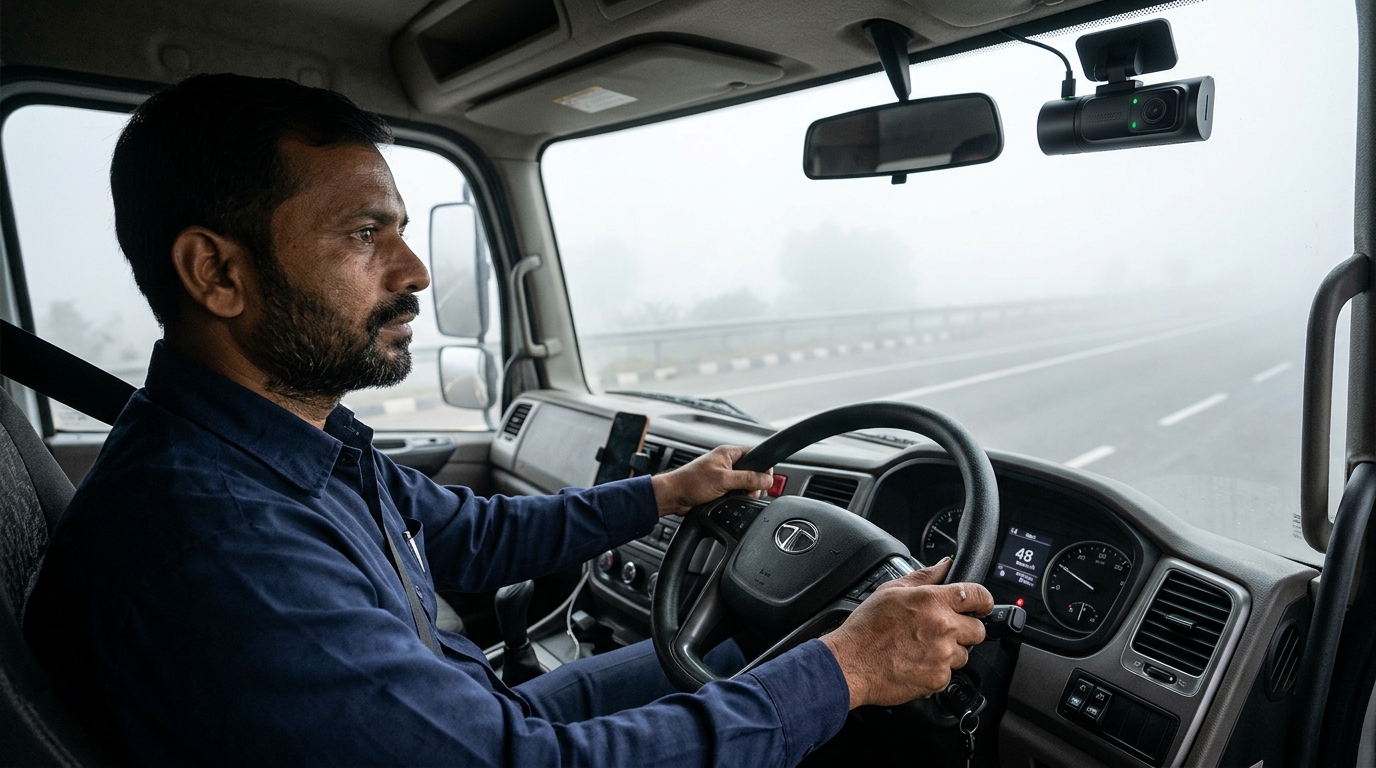
While exterior visibility drops in dense fog, the interior DMS camera and Q-Wake seat vibration remain fully functional, protecting commercial drivers against highway drowsiness.
Capability Matrix: What Still Works in Fog
Here is a quick reference based on how camera-based systems typically behave:
| Feature | Light fog or mist | Dense fog | Why |
|---|---|---|---|
| Collision warning (ADAS) | Works, may be delayed | Limited | Low contrast hides vehicles ahead |
| Lane departure warning (ADAS) | Works if markings visible | Limited | Faded lines blur into the road surface |
| Fatigue & yawning alerts (DMS) | Works | Works | In-cab camera is not affected by outside fog |
| Q-Wake seat vibration | Works | Works | Triggered by driver biometric state, not the road view |
| Video recording | Works | Works, footage looks hazy | Depends on lens and windscreen clarity |
| Live streaming & command centre | Works | Works | Depends on cellular network, not external visibility |
| SOS and two-way calling | Works | Works | Operates via SIM network connectivity |
The takeaway is simple: the in-cab layer holds steady, while the road-facing layer needs your driver’s own caution and lowered speeds to back it up.
Dashcam Night Vision in India: What to Expect
Fog seasons across North India and the Indo-Gangetic plain often peak between midnight and mid-morning, exactly when highways are darkest. That makes dashcam night vision in India a question that deserves a practical answer.
Expect low-light footage to be grainier than daytime clips. Reading number plates at a distance gets tougher, fog adds a milky veil over everything, and glare from oncoming trucks, especially bright aftermarket LED headlights, can bloom across the frame. The best test is not a brochure sample, so ask for clips from your own routes at your own hours.
Roadcast records in 1080p HD, and its team can help match the camera configuration to your operating conditions and visibility needs. For the wider picture, read our guide on video telematics and AI dashcams for fleet safety in India.
Dashcam Lens Fogging: Causes and Fixes
Sometimes the fog is not outside but on your glass. Dashcam lens fogging happens when warm, moist cabin air meets a cold windscreen or lens. A driver’s breath, a flask of hot chai and a closed cabin all add moisture.
On a winter morning, the glass surface drops below the dew point and a thin film forms right in front of the camera. The footage turns blurry and the AI loses its view. These fixes work in practice:
-
•
Demist before the trip: Run the AC or demister so the glass and cabin air reach similar temperatures.
-
•
Wipe the glass clean: Clean the inside of the windscreen and the lens area, since dust and oily film accelerate condensation.
-
•
Mount in the wiper-swept zone: The glass is far easier to keep clear and free of exterior grime there.
-
•
Let moist air escape: Crack a cabin window slightly, if outdoor conditions allow.
-
•
Check the live view: Teach drivers to check the live view or the first minute of footage before leaving the terminal yard.
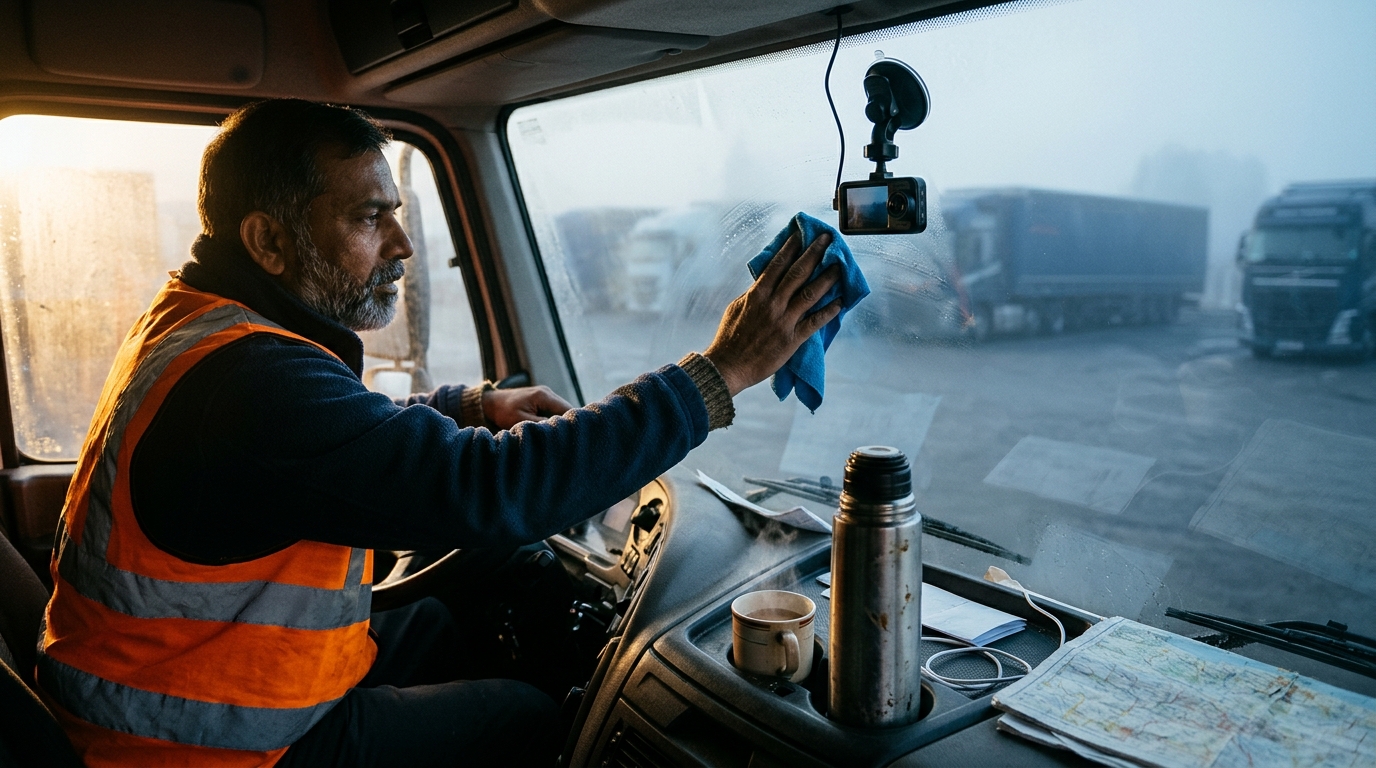
A quick two-minute pre-trip windscreen and lens cleaning routine prevents interior condensation from obstructing optical dashcams on cold winter runs.
What Fleets Should Do in Fog Season
Technology works best when people and processes support it. Here is a simple playbook for fleets using an AI dashcam in fog:
1. Brief Drivers Early
Explain that ADAS alerts are support, not a safety net. Slower speeds, low-beam headlights and longer following distances still win in heavy mist.
2. Make the Lens Check a Habit
Clean glass and a clear lens should be part of every pre-trip routine before departing the hub.
3. Lean on the In-Cab Layer
Use DMS fatigue detection and Q-Wake alerts to catch drowsiness on long, tense fog drives, and review those events on the dashboard alongside fleet management telematics.
4. Use 24x7 Live Visibility
Roadcast’s 24x7 command centre receives live video feeds and exception alerts, and two-way calling lets dispatchers check in with a driver who sounds tired or unsure.
5. Plan Around the Worst Windows
Shift departures or schedule mandatory rest halts on known foggy corridors (like NH-44 or Yamuna Expressway) so drivers are not forced to push through the thickest 2 AM – 6 AM fog.
6. Coach With Footage
After a foggy trip, review incident clips and reward safe decisions, like slowing early or pulling over safely at an authorised toll plaza.
Questions to Ask Vendors About Fog Performance
Before you sign for any commercial dashcam system, put these questions on the table:
-
•
Which alerts depend on the road-facing camera, and which depend on the in-cab camera?
-
•
Can you show real footage from foggy Indian highways, not just clear-weather international demos?
-
•
How does the hardware handle dashcam lens fogging, and what installation tips do you provide?
-
•
How quickly do critical alerts reach the fleet manager in real time?
-
•
Can the configuration be customised for our specific vehicle types, routes and visibility needs?
-
•
What sensor specifications does the system offer for low-light night vision in India?
-
•
What happens to footage and alerts when network coverage drops on remote highway stretches?
Conclusion
Fog does not switch off a smart dashcam, but it does change what the camera can reliably do. The smartest way to approach an AI dashcam in fog is to expect assistance, not rescue. Pair it with clean lenses, realistic expectations, driver briefings and good coaching, and you get a layered defence that holds up when the road disappears.
Ready to make fog season safer for your fleet? Tell the Roadcast team about your vehicles, routes and visibility needs, and they will help you pick the right camera setup. Request a demo or talk to an expert today.
Frequently Asked Questions
Do AI dashcams work in fog?
Yes, they keep recording, streaming and monitoring the driver. Their road-facing alerts may be limited in dense fog because the camera cannot see clearly. In-cab monitoring continues as normal.
Does ADAS work in low visibility or heavy fog?
Camera-based ADAS works best with clear visibility. In light fog it usually still functions, though alerts may be delayed. In heavy fog, expect ADAS low visibility performance to be limited, so drivers must slow down and stay alert.
Do night-vision dashcams help in fog?
They help in darkness and light haze, but they do not solve dense fog, since droplets scatter light. For dashcam night vision in India, test footage from your own routes before choosing a setup.
Why does my dashcam lens fog up, and how can I stop it?
Warm, moist cabin air meets cold glass and forms a film. Demist before the trip, keep the glass clean, mount the camera in the wiper-swept area and let moist air escape.
Does DMS fatigue detection still work in fog?
Yes. The DMS camera is inside the cabin, so fog outside does not affect it. It continues to track eye closure, yawning and distraction, and Q-Wake can alert a drowsy driver through a seat vibration.
Should drivers still slow down if the truck has ADAS?
Absolutely. ADAS assists; it does not drive the vehicle. Lower speed, low beams and a longer following distance remain the best protection in fog.