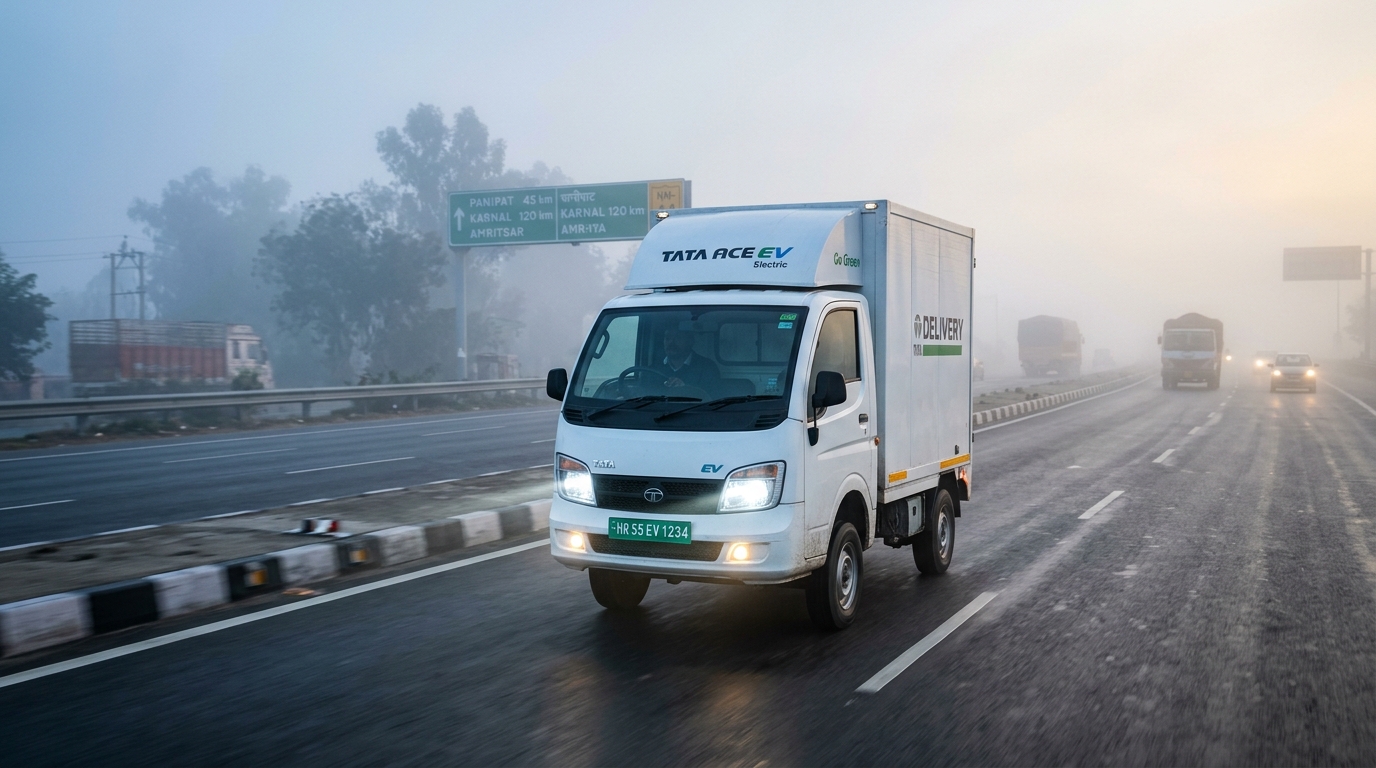
Before we understand the plight of Indian EV fleet drivers, let's consider a scenario, shall we?
It is 5:40 on a December morning near Ludhiana; fog hangs over the highway, the driver's chai is going cold on the dashboard, and the electric vehicle van shows 82% charge. Yes, on paper, that is plenty for the 140km run to Delhi, but by Ambala, you see the percentage falling faster than the pace of kilometers adding up on the speedometer, and the dispatcher's phone is already ringing.
If that sounds familiar, you have met EV range in winter the hard way, but the good part here is that everything that happens on the road is predictable, and anything predictable can be planned. So, if you are wondering how to avoid issues while driving EV fleets during winter, let us look at what cold does to an EV, how much range you should expect to lose, and how to build routes that keep your fleet moving.
Why Does Cold Weather Reduce EV Range?
For those who are confused about how cold weather impacts EV range, we have some information for you:
How Cold Temperatures Affect EV Battery Performance
A lithium-ion battery typically runs on chemistry, and chemistry slows down in the cold. Yes, in scientific terms, ions move sluggishly, internal resistance rises, and part of the stored energy becomes temporarily harder to draw. Nothing is permanently lost, and range returns once the pack warms up. But a cold pack on a cold morning simply has less usable energy. The entire process that we talked about now is battery temperature range loss, and it perfectly explains why the same vehicle behaves differently in a sheltered Chennai depot and an open yard in Shimla.
How Cabin Heating Impacts EV Range in Winter
Most people might not understand this, but a diesel engine throws off waste heat that warms the cabin for free, whereas an EV has no such luxury, which is why the heater, the defogger and the battery’s own warming system all draw from the same pack. Especially on foggy Indian highways, drivers run the demister almost non-stop, along with headlights and wipers, and this is why, of all winter loads, cabin heating is usually the biggest swing factor for which you are losing range.
Other Factors That Reduce EV Range in Winter
Cold air is denser, so aerodynamic drag also rises during this period. You will see tyre pressure dropping as the temperature falls, which increases rolling resistance. Besides, regenerative braking is also often limited while the battery is cold, so you recover less energy on descents. Add wet roads and slow fog crawls to the equation along with stop-start traffic and running the heater, and even the small losses would start to stack up.
Battery Diagnostics & Thermal Management in Cold Temperatures
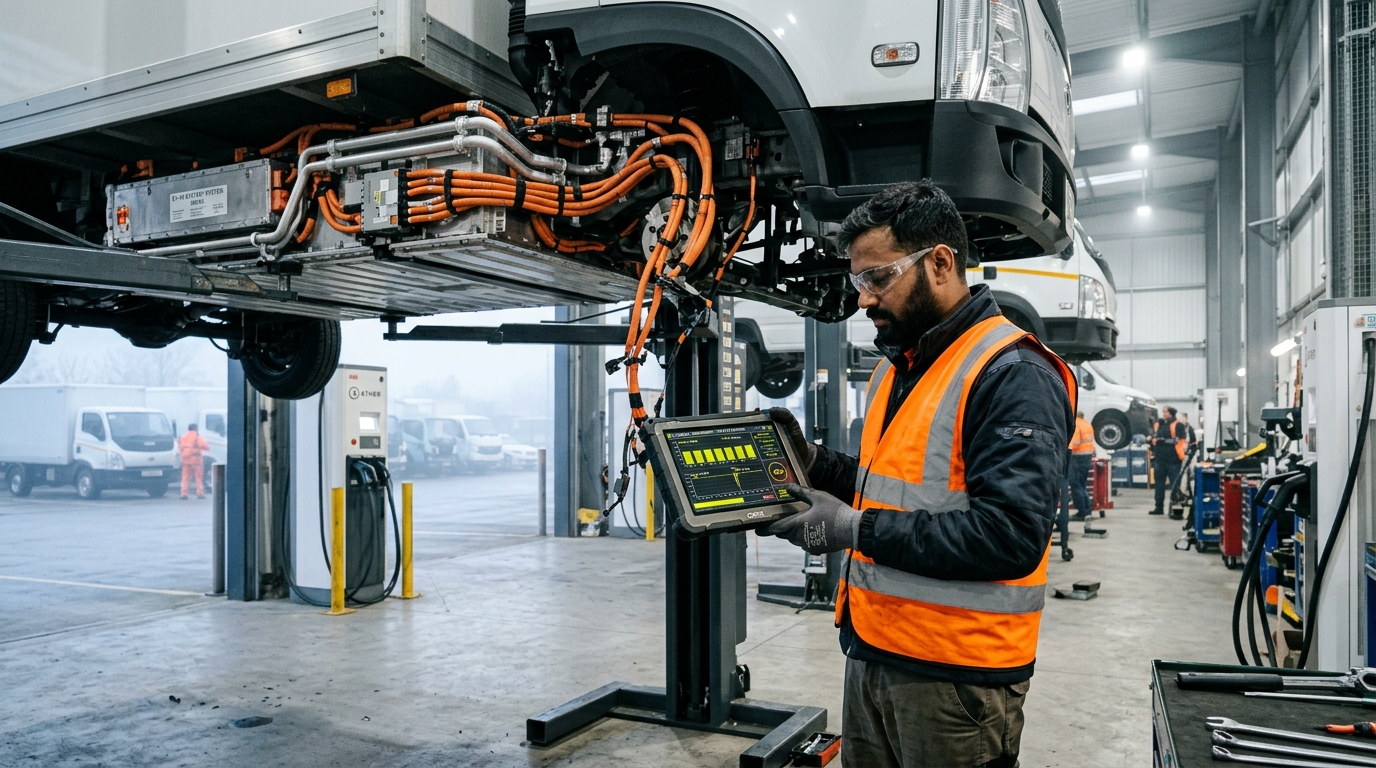
Fleet technician conducting high-voltage battery diagnostic testing and thermal analytics on a commercial electric vehicle during a cold winter morning depot check
How Much EV Range Is Lost in Cold Weather?
The most useful number in the context of range comes from AAA’s testing of five electric vehicles. At 20°F (about minus 7°C), the average range fell by 41 per cent with the heater on. (Source: AAA Newsroom.) The cold itself costs you a little, but the heater costs you a lot.
Thus, minus 7°C is harsher than a Delhi or Lucknow winter, but it is routine in parts of Himachal Pradesh, Uttarakhand, Jammu and Kashmir and Ladakh.
| Indian Operating Region | Expected Winter Temperature Range | Estimated Range Reduction | Primary Contributing Factors |
|---|---|---|---|
| Southern & Coastal Plains (Chennai, Bengaluru, Mumbai) | 18°C to 28°C | 5% to 10% (Minimal) | Mild thermal changes, minimal or zero cabin heating needed |
| Northern Plains (Delhi NCR, Punjab, Haryana, UP) | 3°C to 12°C (Dense Fog) | 10% to 20% | Continuous demister/defogger, headlights, slow fog crawl, denser air |
| Himalayan & Hill States (Himachal, Uttarakhand, J&K, Ladakh) | -7°C to 5°C (Sub-zero) | 25% to 40% | Severe battery internal resistance, continuous high-load cabin heating, uphill elevation drain |
How Cold Weather Affects EV Charging?
Many fleet drivers have questions about how winter impacts EV vehicle's charging, and for them we have just one line: Cold hits the charging stop just as it hits the road.
Why EV Batteries Charge More Slowly in Winter
A battery management system protects cold cells by limiting the charging rate, so a fast charging stop that felt quick in October can take noticeably longer in January, and a queue at the charger makes it worse. Therefore, you need strategic EV charging planning by padding every charging stop, not just every route.
How EV Battery Preconditioning Improves Winter Efficiency
Preconditioning means warming the battery and cabin while the vehicle is still plugged in, so the energy comes from the grid and not from the pack. Here, you leave with a warm battery, a clear windscreen, and more usable range, and where your vehicle supports scheduled departure, you can make it a standing winter rule.
Depot Fast Charging & Scheduled Battery Preconditioning
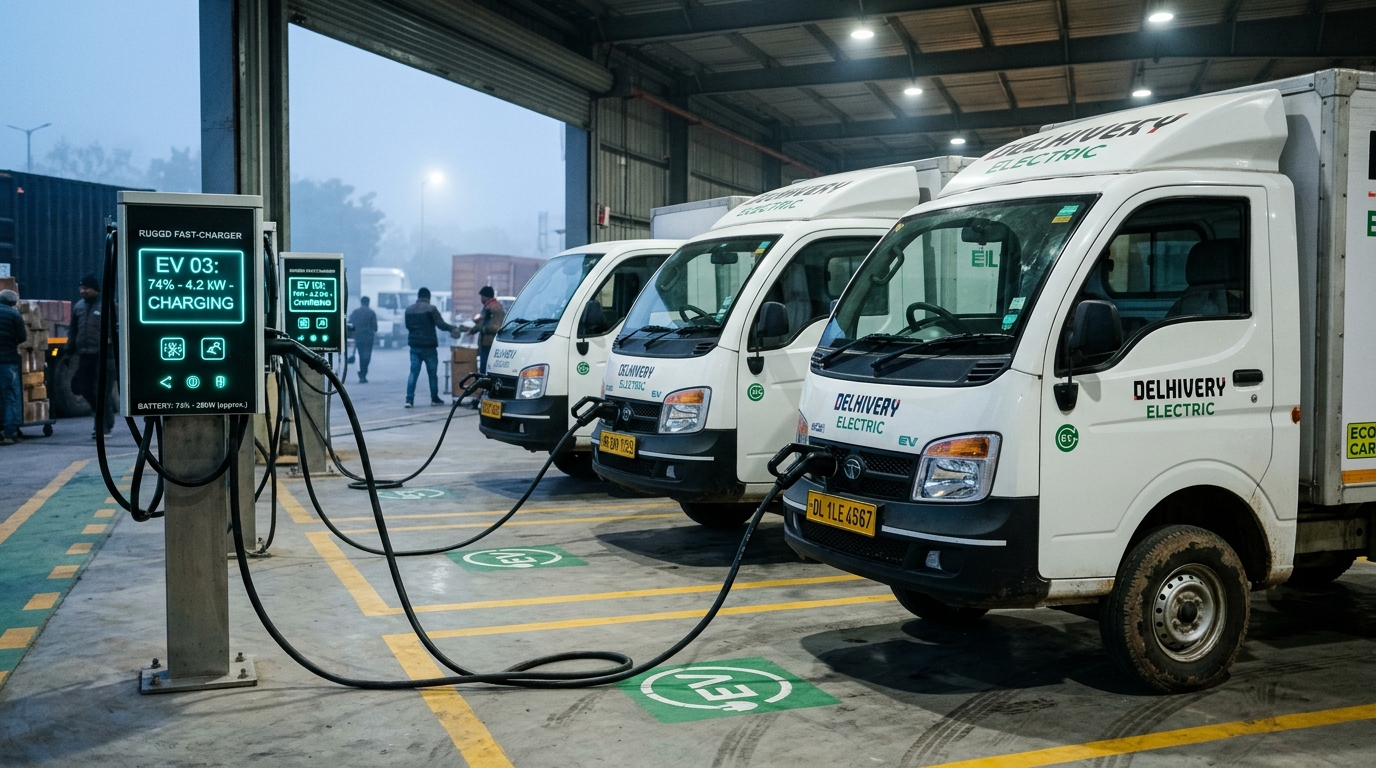
Commercial EV delivery fleet connected to high-power DC fast chargers with scheduled battery preconditioning at a North Indian logistics depot at dawn

How to Plan EV Routes in Winter: A Step-by-Step Guide
Scouring the web with questions like how to plan EV routes in winter? Well, here's a simple routine that your dispatchers can follow every morning for EV route planning:
1 Start with a derated range figure.
Do not plan with the brochure range, rather take the real-world range that your vehicle delivers in your own operations, and then reduce it using the range that you are actually witnessing. For instance, a van that manages 150 km in September might be planned at 120 to 130 km for a foggy northern highway run.
2 Set an arrival state-of-charge buffer.
Never plan to arrive near-empty when you are driving an EV. In winter, aim to reach the next charger or depot with a cushion of around 15-20%, and more on hill routes because the buffer absorbs a surprise heater load, a detour, or a long jam.
3 Choose primary and backup chargers
Name a primary charger and a backup for every leg. Check working hours, charger output and the usual queue, and confirm both before the vehicle leaves because a backup 10 km off route is far better than a dead charger and no plan B.
4 Account for terrain, load, and fog delays
Uphill climbs on your EV drain energy faster, and cold limits how much you can recover on the way down. Also, if you have heavy payloads, it adds to the burden. Remember that a vehicle crawling through the fog with heater on is still using battery, which is why you need to build extra time and energy into hilly or fog-prone stretches, and never promise a delivery window based on clear winter speeds.
6 Best Practices to Improve Winter EV Fleet Efficiency
Planning only works when daily habits support it, which is why here are some worthwhile tips for your EV fleet routine:
Park Under Shelter
Park under shelter where possible, and charge close to departure so the pack leaves warm.
Precondition on Grid
Precondition every vehicle while it is plugged in to draw warming energy directly from the grid.
Train Fleet Drivers
Brief drivers on smooth acceleration, steady speeds, and sensible heater and demister use. (Deploy video telematics & AI dashcams for real-time driver coaching).
Monitor Tyre Pressure
Check tyre pressure weekly as temperatures fall to reduce rolling resistance and battery drain.
Stagger Depot Charging
Stagger depot charging so vehicles do not compete for power. This is the heart of EV charging planning at scale.
Iterative Learning
Treat the first run of electric fleet winter in India as a learning exercise, noting what worked on each specific route.
How Fleet Telematics Helps Monitor EV Range in Winter
At Roadcast, we know that you cannot improve what you cannot see, which is why our fleet management platform connects with the vehicle’s CAN bus and Battery Management System (BMS). Dispatchers get live state-of-charge visibility, route progress, and battery health diagnostics in one control tower.
Teams can track energy consumption per route, compare planned range against actual range on cold mornings, and use range-aware route optimisation and tracking solutions to adjust dispatch before a vehicle is stranded. For mixed fleets transitioning from conventional fuel to electric power, integrating with our fuel monitoring system provides unified energy visibility. Charging coordination also helps to avoid clashes at the depot (synced with smart yard management software), and driver behaviour insights show who is getting the most from every kilowatt-hour.
When you draw insights from here, within a few weeks, your own data will show the extent of EV range in winter and battery range loss, which sharpens the route planning for your EV fleet.
Need a bigger picture? Feel free to dive into our comprehensive guide on EV fleet management.
Real-Time Telematics Dispatch & Dynamic Winter Route Planning
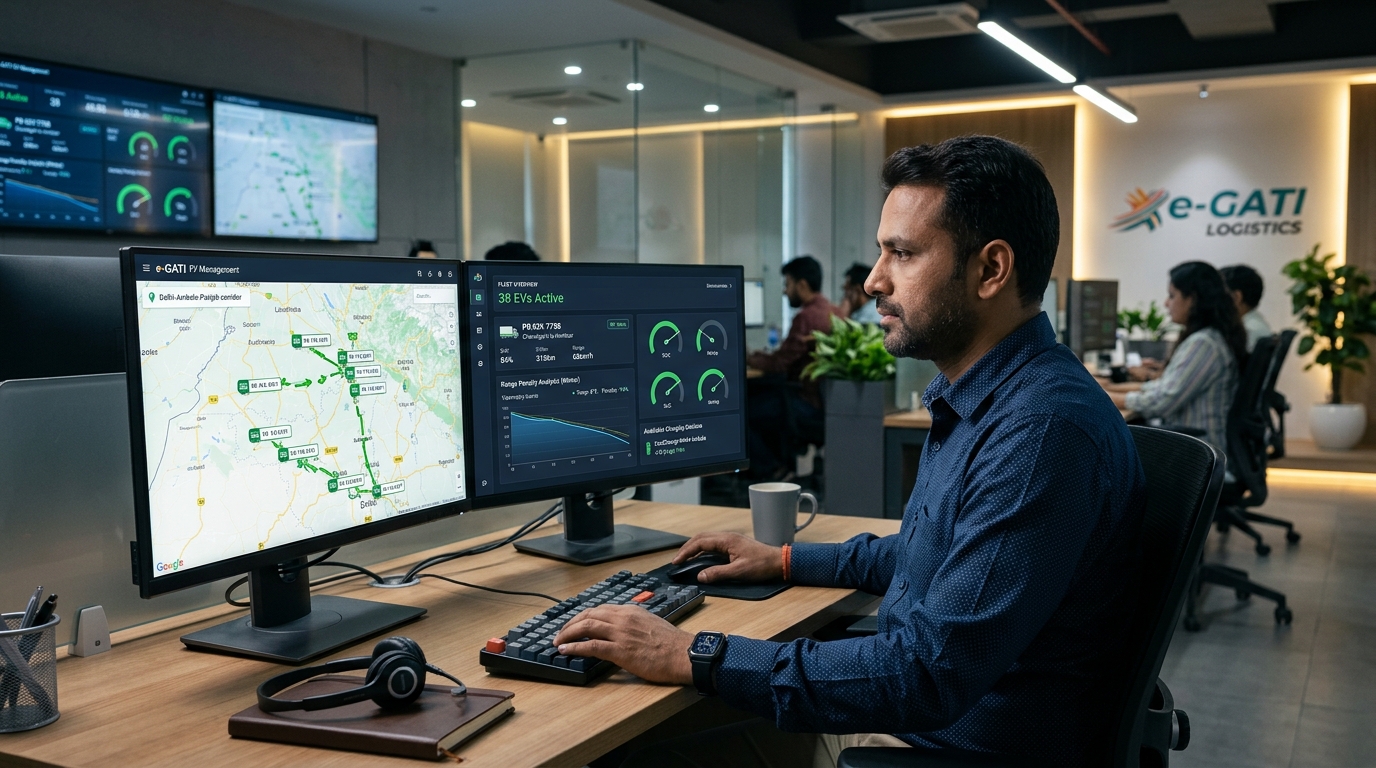
Fleet control tower dispatchers monitoring live electric vehicle battery State of Charge, temperature-derated range corridors, and charging waypoints on telematics displays
Conclusion
Cold weather doesn't make electric fleets unworkable; it rather makes them honest. Thus, you need to plan with derated numbers, keep a buffer, back up every charger, and watch your data. Do that, and your electric fleet during winters will become just another season on the roster, not a string of stranded vehicles and anxious customers.
Ready to Winter-Proof Your Electric Fleet Operations?
Connect with Roadcast to gain live CAN bus battery visibility, intelligent range-derated routing, and unified depot charging management.
Frequently Asked Questions
How much does cold weather reduce EV range in India?
It depends on temperature, heater use, and terrain. As a starting point, plan for 5 to 10 per cent on mild plains routes, 10 to 20 per cent in the northern plains, and 25 to 40 per cent in the hills. Then refine it with your own trip data.
Do EVs lose range in Indian winters, or only in hill states?
Both, but to different degrees. Hill routes see the steepest losses. Foggy northern plains mornings with the heater running also trim range, while southern and western plains see a much smaller effect.
Does preconditioning help EV range in winter?
Yes, warming the battery and cabin while plugged in uses grid power instead of battery energy, so you start the trip with more usable range. A warm pack also charges better at your next stop.
How should fleets plan charging stops in winter?
Choose a primary and a backup charger for each leg, add time for slower charging, keep an arrival buffer, and confirm charger availability before dispatch.
Does cold weather damage EV batteries in the long term?
Range loss from cold is mostly temporary and recovers as the pack warms. Long-term battery health depends on how the battery is charged and managed, so follow manufacturer guidance and track battery health diagnostics over time.
Can telematics track battery temperature and range loss?
Telematics linked to the CAN bus and Battery Management System can report state of charge, battery health, and energy use per route, so you can compare planned range with actual range. Which battery parameters are available depends on your vehicle make and model.