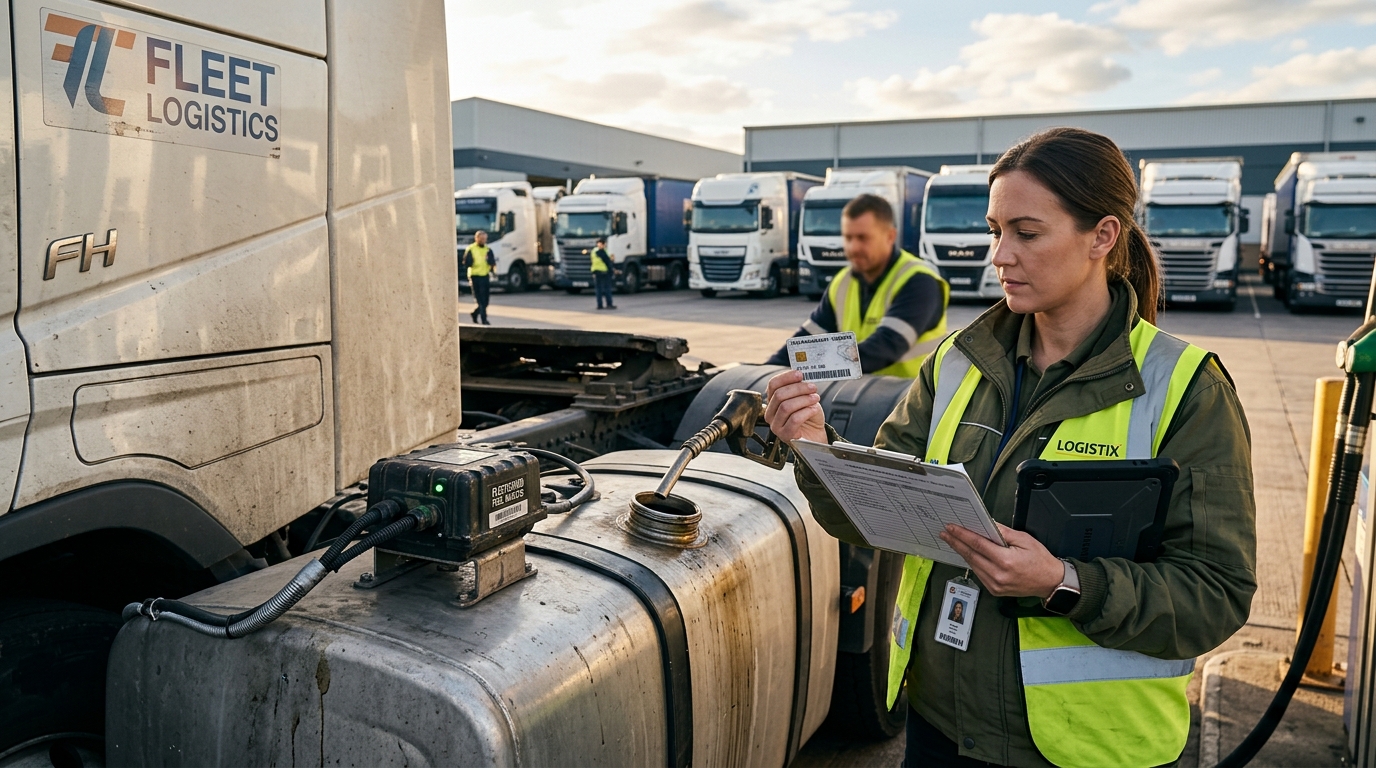
Managing fuel expenses is one of the biggest challenges for businesses operating commercial vehicles and large fleets. Fuel costs can rise quickly when vehicles travel long distances, fuel prices fluctuate, or employees use company vehicles regularly. For fleet managers, controlling fuel expenses takes more than simply recording how much fuel is purchased - it requires knowing where every litre actually goes.
Two common approaches help solve this: a fuel card system and a fuel sensor paired with a GPS fuel monitoring system. Fuel sensors generally provide better fleet visibility, and this article breaks down why.
Fuel Card vs Fuel Sensor: What Is the Difference?
A fuel card system for fleet management controls fuel purchases. Instead of paying for fuel with cash or personal payment methods, employees or drivers use a dedicated fleet fuel card at authorised fuel stations.
A fuel sensor, on the other hand, measures fuel quantity and changes inside a vehicle's tank in real time. When paired with GPS, it can also flag unusual vehicle movement, track fuel consumption, and highlight abnormal usage patterns.
How Fuel Cards Work for Fleet Management
A fuel card is a specialised payment tool that lets businesses purchase, track, and manage vehicle fuel and related expenses. Companies use fuel cards to centralise fuel spending and make transactions easier to track. Depending on the provider, managers can review details such as the amount spent, purchase date, and the vehicle or employee linked to each transaction.
A fleet fuel card reduces paperwork and gives a more organised way to monitor fuel-related spending - particularly useful for companies running a large number of vehicles.
How Fuel Sensors Work for Fleet Management
A fuel sensor paired with GPS monitoring addresses the consumption and post-purchase side of fleet fuel management - the side a fuel card cannot reach. Real-time fuel-level data from calibrated tank sensors gives continuous visibility into every vehicle's tank: if the level drops while the engine isn't running, a siphoning alert fires immediately.
When the level rises instead (a fill event), the system logs the volume added and compares it against the card transaction, so the two data sets can be reconciled against each other.
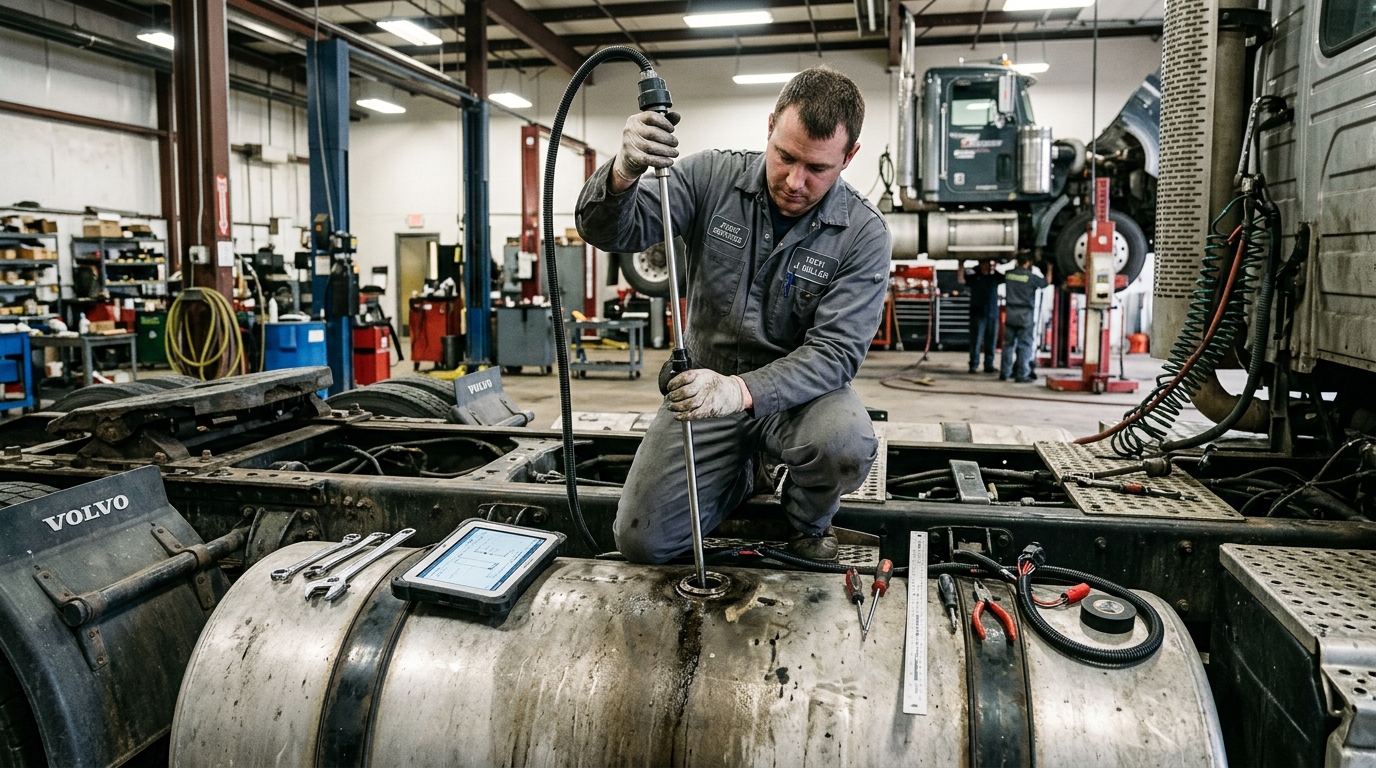
Capacitive fuel sensor installation inside a commercial vehicle tank for real-time fuel-level monitoring
Fuel Card vs Fuel Sensor: Key Differences
Fuel cards control where and how much fuel is purchased - restricting transactions to approved stations, capping per-transaction and daily volumes, and producing itemised purchase records per vehicle. A fuel sensor measures what actually happens to that fuel once it's in the tank, detecting siphoning and calculating consumption per kilometre per vehicle.
Key Differences at a Glance
| Feature | Fuel Sensor | Fuel Card |
|---|---|---|
| Primary role | Physical tank monitoring | Purchase control & billing |
| Real-time data | Yes (live fuel levels) | No (only at purchase time) |
| Theft detection | Detects mid-route siphoning or sudden drops | Flags suspicious spending patterns |
| Best used for | Tracking actual fuel burn and losses | Stopping unauthorised spending |
Which Option Gives Better Fuel Visibility?
A fuel sensor gives better direct fuel visibility because it tracks real-time tank levels, actual consumption, and sudden drops - whereas a fuel card only tracks purchase data at the pump.
What a Fuel Sensor Measures
It measures what happens inside the tank: live volume data, exact miles-per-gallon (or km/l) per trip, and instant detection of siphoning or leaks.
What a Fuel Card Measures
It measures the financial transaction at the pump - how much fuel was bought, when, and where - but it cannot see fuel usage once the vehicle is moving or being drained.
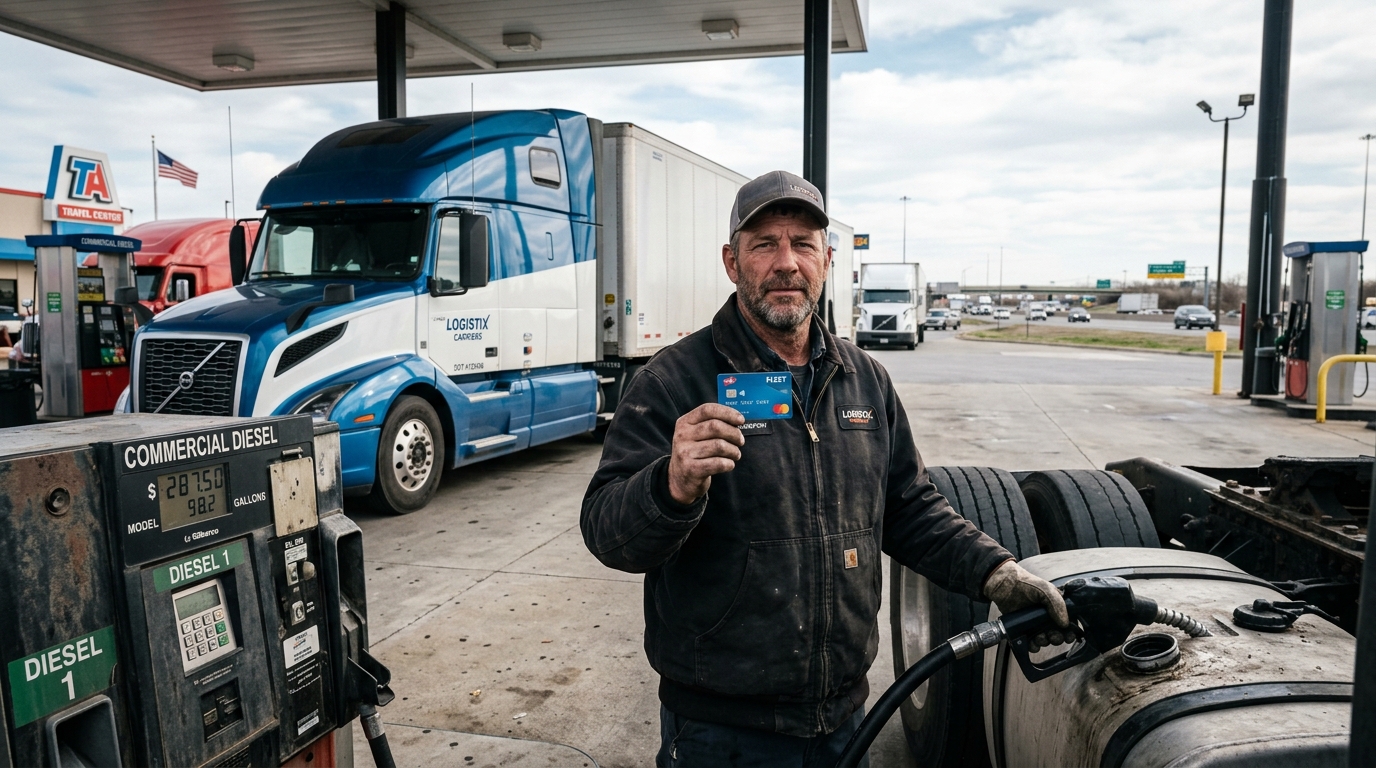
Fleet fuel cards control purchasing at the pump, but provide no visibility into fuel usage or theft once in the tank
How Fuel Sensors Help Detect Fuel Theft
Fuel theft is one of the most common causes of rising operating costs for commercial vehicles and fleets. Modern fuel sensors are built to catch even small, unauthorised fuel losses and alert vehicle owners instantly. Here's how that detection actually works.
Continuous Fuel Level Monitoring
A fuel sensor constantly measures fuel quantity inside the tank, whether the vehicle is moving, idling, or parked. The system records fuel-level data in real time, tracks every change in volume, and learns each vehicle's normal usage pattern.
Detection of Sudden Fuel Drops
Fuel theft is usually identified when the fuel level drops suddenly without the engine running. If fuel drops while the engine is off or the vehicle is stationary, the system flags it as potential theft.
Differentiating Theft From Normal Consumption
One of the most advanced parts of how a fuel sensor works is its ability to tell theft apart from normal consumption. It filters out fuel sloshing caused by rough roads, ignores minor level fluctuations, and applies time- and volume-based thresholds before raising an alert.
Instant Fuel Theft Alerts
Once the system detects suspicious activity, it generates an alert immediately - sent via SMS, mobile app, or email - including the quantity of fuel lost along with the exact time and GPS location.
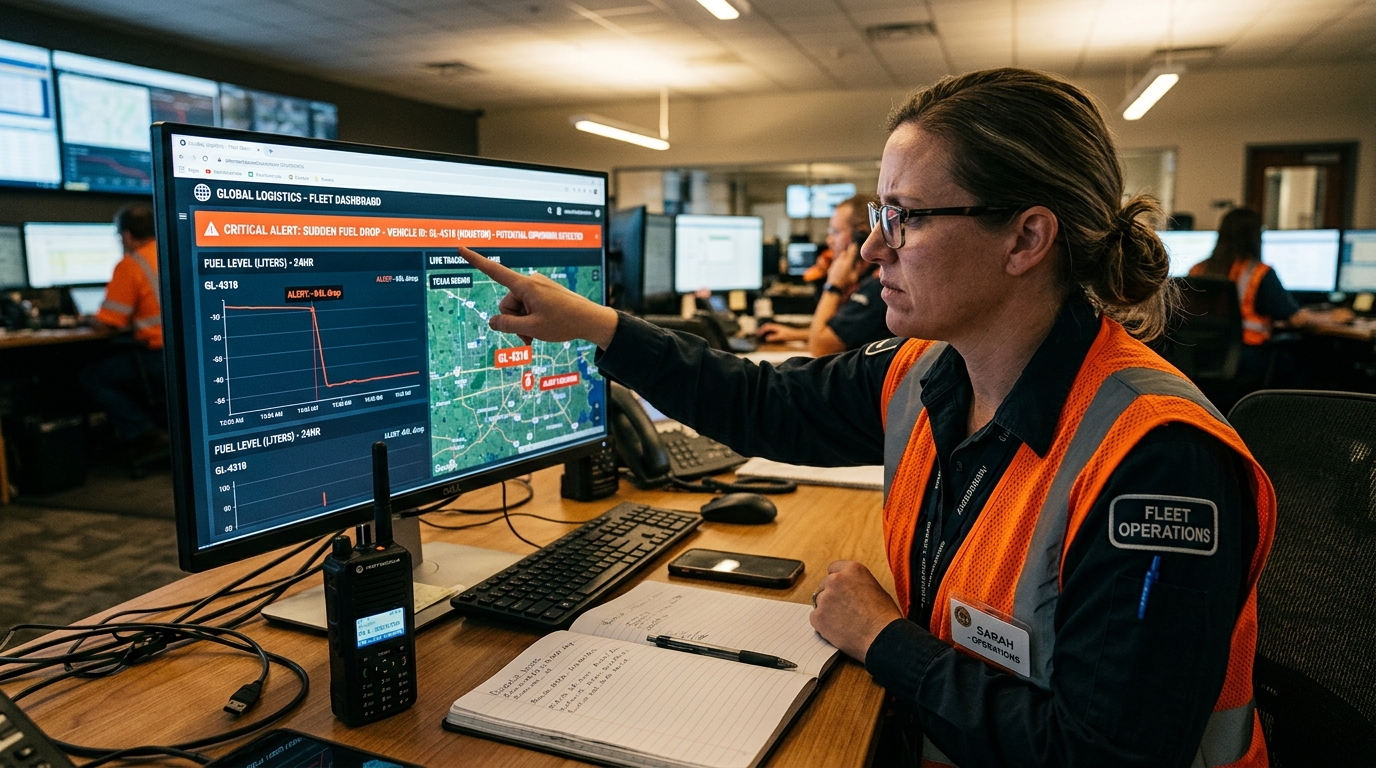
Real-time telematics dashboard alerting fleet managers to a sudden fuel-drain event with GPS location proof
Fuel Theft Event Reports
Fuel sensors store theft-related data for later analysis. Detailed reports show fuel-drain events, graphs display fuel-drop patterns, and historical data helps identify repeat offenders or recurring problem routes.
Integration With GPS Tracking for Proof
Fuel sensor data syncs with GPS tracking to provide location-based proof - including the exact theft location, time-stamped evidence, and route or parking analysis.
Can Fuel Cards and Fuel Sensors Work Together?
Yes - fuel cards and fuel sensors work together in modern fleet fuel management systems.
How They Work Together
- Purchasing vs. consumption: purchase receipts are combined with live tank levels and GPS data. Fuel cards track the financial side (cost, litres bought, location); fuel sensors track the physical side (actual fuel levels and tank changes).
- Real-time matching: software automatically compares what the fuel card says was bought against how much fuel actually entered the tank.
- Fraud detection: the system flags a mismatch - for example, if a card transaction is billed for 50 litres but the sensor shows the tank level barely changed.
- Theft prevention: if fuel drops while the engine is off or the vehicle is stationary - even without an unauthorised card transaction - it's flagged as potential theft.
- Lower costs: the combination stops unauthorised card use and catches hidden fuel loss early.
How to Choose the Right Fuel Monitoring Approach
Several types of fuel sensors are available, differing in technology, use case, and the level of detail they provide. Here's a quick look at the most common ones.
Capacitive Sensors
A two-part electrified rod - an inner rod and an outer tube - is installed through the fuel tank's upper section and connected to the sensor. Fuel acts as a capacitive liquid: as it moves up or down the rod, capacitance changes, and that change indicates the fuel level. This data is then transmitted to the fleet or fuel management software, which converts it into consumption metrics.
Ultrasonic Sensors
These attach externally to the bottom of the tank - no drilling required - and use sound waves to measure fuel depth. They work well in stationary equipment but lose accuracy in moving vehicles because of fuel movement.
Float Sensors
A foam float suspended in the tank moves up and down as the fuel level changes. It's connected to a metal rod that rubs against a resistor, sending a varying signal from the vehicle battery to the dashboard's fuel gauge. Float sensors carry an error margin of 10–30%, so they're best suited to private vehicles and don't provide much actionable data for fleets.
What to Look for When Choosing a Sensor
- Ease of installation and setup - to reduce on-site work and avoid unnecessary costs.
- Integration compatibility - seamless connection with GPS trackers, telematics systems, and fleet management platforms.
- Accuracy and reliability - to ensure dependable, actionable data.
- Environmental resistance - stable operation under high/low temperatures, dust, dirt, and vibration.
Roadcast Recommendation: Roadcast recommends capacitive fuel level sensors, as they tick all four boxes. They're highly accurate, resistant to environmental stress, and don't need frequent maintenance. Their design allows precise calibration for any tank, and they work with all common fuel types - connecting to telematics hardware via standard protocols such as RS232/RS485 or Bluetooth Low Energy (BLE). If you need a sensor that delivers strong performance without added complexity, capacitive is the way to go.
Fuel Card vs GPS Monitoring vs Integrated System: Capability Comparison
To evaluate which architecture delivers the highest return on investment, compare capabilities across purchasing control, theft detection, consumption analytics, and total implementation scope:
| Capability | Fuel Card Only | GPS Monitoring Only | Integrated (Card + GPS) |
|---|---|---|---|
| Purchasing location control | Strong - station-network restriction at point of sale | None - cannot prevent purchase at an unapproved location | Strong - card prevents unauthorised purchases; GPS confirms vehicle location at purchase |
| Per-transaction volume limit | Strong - card declines above configured limit | None at point of sale | Strong - card enforces the limit; GPS consumption analysis validates whether the volume is reasonable |
| Siphoning detection | None - card shows fuel as legitimately purchased; can't see what happens after | Strong - real-time sensor detects level drop without ignition, firing within 2–5 minutes | Complete - sensor detects siphoning; card record confirms fuel was legitimately added |
| Card misuse / personal-vehicle fuelling | Partial - correct station and volume, but can't detect the wrong vehicle | Strong - GPS location mismatch vs. card transaction location identifies misuse | Complete - GPS reconciliation confirms the vehicle was at the station at purchase time |
| Driving efficiency / consumption per km | None - card shows litres purchased, not consumption efficiency | Strong - GPS behaviour data explains consumption; driver coaching targets specific behaviours | Complete - same GPS data plus card purchase volume for consumption calculation |
| Idling waste detection | None | Strong - GPS ignition-on with speed = 0 for idling duration | Complete |
| Over-speed fuel waste | None | Strong - GPS speed vs. posted limit identifies over-speed fuel impact | Complete |
| Monthly statement / finance reporting | Strong - itemised card statement per vehicle for ERP upload | Partial - consumption data needs conversion to cost for finance reporting | Complete - card spend and GPS consumption data in one unified finance report |
| Implementation cost | Low - card issuance only, no hardware | Medium - GPS device and fuel sensor installation | Medium - GPS and sensor hardware plus card API integration |
Conclusion
Fuel cards control the purchasing transaction: what fuel is bought, where, at what time, and on which card. GPS fuel monitoring controls the usage side: how the fuel is driven, whether it leaves the tank without powering the vehicle, and whether consumption makes sense for the distance covered.
Neither system alone delivers complete fuel management visibility. A fleet running fuel cards without GPS monitoring has good purchasing control but no consumption insight. A fleet running GPS monitoring without fuel cards has good consumption visibility but limited purchasing control. A fleet running both - with card transactions reconciled against GPS and sensor data - gets complete fuel management visibility and the highest total fuel cost reduction.
Looking to combine both? Talk to Roadcast's fuel monitoring team to see how integrated fuel cards and sensors can work for your fleet.
Calculate Your Fleet's Fuel & ROI Potential
Find out how much your enterprise can save on fuel pilferage, idling waste, and route deviations using Roadcast's interactive calculator.
Frequently Asked Questions (FAQ)
What is the difference between a fuel card and a fuel sensor?
A fuel card lets drivers pay for fuel at authorised stations and gives managers itemised purchase records. A fuel sensor measures fuel quantity and changes inside the tank in real time, showing what actually happens to the fuel after it's bought.
Are fuel sensors better than fuel cards for fleet visibility?
A fuel sensor gives better direct fuel visibility by tracking real-time tank levels, actual consumption, and sudden drops, whereas a fuel card only tracks purchase data at the pump.
Can fuel sensors detect fuel theft?
Yes. Modern fuel sensors are designed to detect even small, unauthorised fuel losses and alert vehicle owners instantly, with the time and GPS location of the event.
Can fuel cards track actual fuel consumption?
No. Fuel cards record what was purchased, when and where, but they cannot track how much fuel is actually burned or lost once it's in the tank.
Can a fleet use fuel cards and fuel sensors together?
Yes. Fuel cards alone give strong purchasing control but no consumption insight, and fuel sensors alone give strong consumption visibility but limited purchasing control. Running both together, with transactions reconciled against sensor and GPS data, gives complete fuel visibility and the greatest overall cost reduction.
Related Blogs
• Fuel Management System & Software for Fleets: Monitor, Save & Prevent Theft
• Fuel Monitoring Intelligence: How Enterprises Stop Pilferage & Improve KMPL Efficiencies
• Fuel Monitoring & Route Optimization for Large-Scale Transport Networks
• Maximising Miles: Strategies for Fuel Saving
• Fleet Management for Mining: Cut Costs & Drive Sustainability