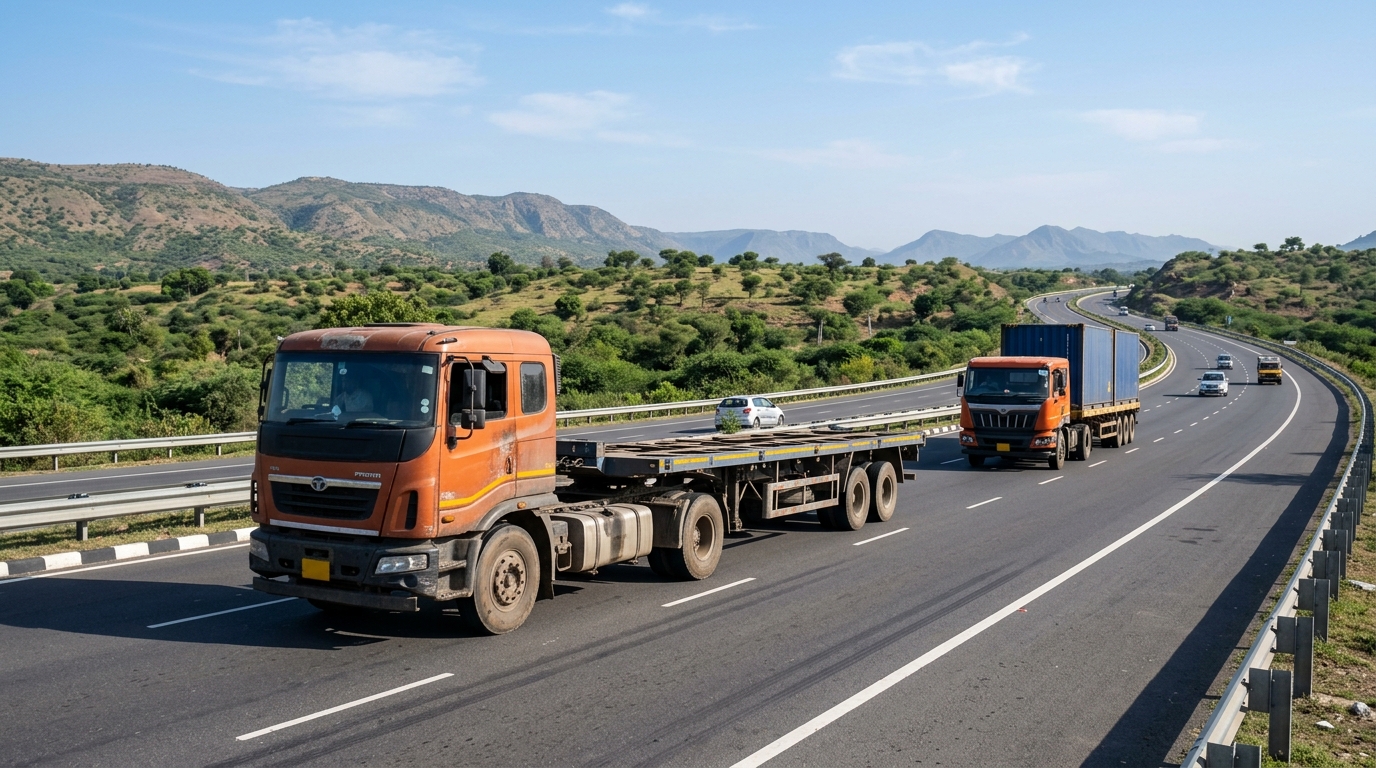
If you manage a fleet in India, fuel can be one of the most difficult operating costs to control. You may know how much fuel you purchase every month, but manual logs often make it difficult to know exactly how much is consumed, where it is being used, and whether any fuel is being lost through theft, leakage, excessive idling or inefficient operations.
A fuel monitoring system for fleet vehicles provides continuous visibility into fuel levels, consumption and refuelling events. By combining fuel-level sensors with telematics and software analytics, fleet operators can identify unusual fuel drops, monitor consumption patterns and act on potential losses in real time.
In this guide, we explain what a fuel monitoring system is, how fuel sensors work, how fleets can detect fuel theft, what alerts and reports to monitor, and how fuel monitoring can support better fleet efficiency.
Why Fuel Monitoring Matters for Fleet Operations
Why Fuel Is One of the Biggest Fleet Operating Costs
Fuel is a major operating expense for transport and logistics fleets. Changes in fuel prices, vehicle utilisation, route length, idling and driving behaviour can all affect the cost of every trip.
The supplied draft cites a NITI Aayog/RMI India report for a heavy-duty truck total-cost-of-ownership estimate. (Source)
Fuel is also difficult to monitor manually because vehicles spend long periods on the road, refuelling may happen at different locations, and paper logs or odometer readings do not provide continuous visibility.
Where Manual Fuel Tracking Falls Short
- Unsupervised Transit: Drivers may be on the road for hours or days without direct supervision.
- Decentralised Purchases: Fuel may be purchased at different fuel stations and receipts may not always be available in a central system.
- Human Inaccuracies: Manual odometer readings and logbooks can contain errors or inconsistencies.
- Delayed Data: Fuel bills received later do not always provide enough information to reconstruct what happened during a trip.
- Hidden Inefficiencies: Excessive idling, inefficient routes and unusual consumption can remain hidden until after the fuel has already been consumed.
What Is a Fuel Monitoring System and How Does It Work?
A fuel monitoring system combines hardware and software to track fuel levels, consumption and refuelling activity across vehicles or other fuel-powered assets.
The basic workflow is straightforward: a fuel-level sensor measures changes inside the tank, the data is transmitted through a telematics/GPS-connected device, and the software analyses the information to identify normal and abnormal fuel events.
Fuel Level Sensor Installation
A fuel-level sensor is installed in the vehicle's fuel tank and continuously measures changes in fuel level. Sensor selection and calibration depend on the tank design, vehicle type and operating conditions.
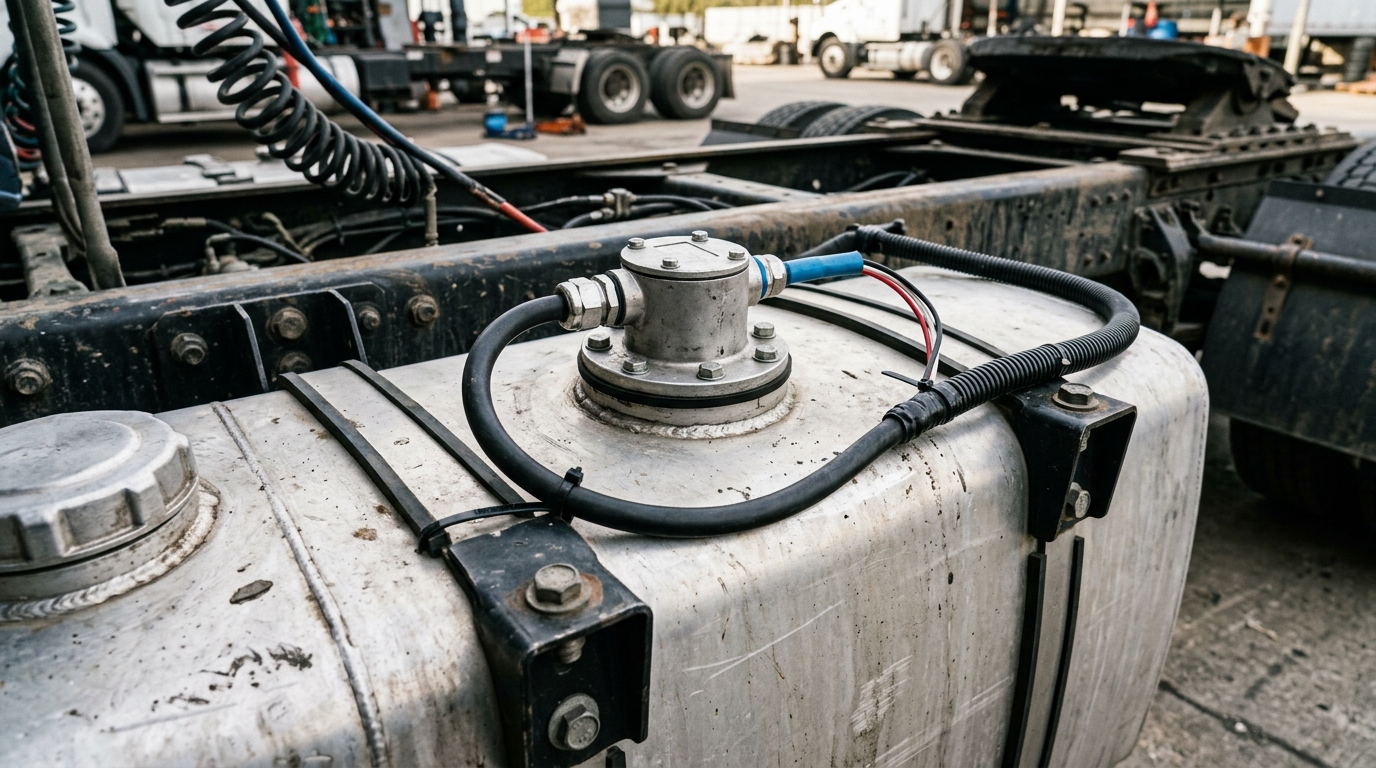
Calibrated capacitive fuel-level sensor installed on a commercial truck diesel tank for real-time tank level telemetry
GPS/GSM Data Transmission
The fuel data can be combined with vehicle location, movement and ignition information through telematics connectivity. This context helps fleet managers understand whether a fuel-level change is associated with normal consumption, refuelling or a potentially abnormal event.
Real-Time Fuel Analytics and Alerts
The monitoring platform turns sensor readings into dashboards, reports and alerts. Managers can monitor fuel consumption, refuelling events, idling and sudden fuel-level changes without relying only on manual driver updates.
Types of Fuel Monitoring Sensors for Fleet Vehicles
Sensor selection should be based on the vehicle, tank design, operating environment, calibration requirements and the level of accuracy required. Two commonly discussed technologies are capacitive and ultrasonic sensing.
| Sensor type | How it works | Typical considerations |
|---|---|---|
| Capacitive | Measures changes in electrical capacitance as fuel level changes. | Widely used for fuel-level monitoring; requires correct installation and calibration. |
| Ultrasonic | Uses sound waves to measure the distance to the fuel surface without direct contact. | Non-contact measurement; performance can depend on vehicle movement, tank geometry and operating conditions. |
Capacitive Fuel Sensors
Capacitive sensors measure changes in electrical capacitance as fuel levels rise or fall. They are commonly used in fleet applications and can be calibrated for the tank in which they are installed.
Ultrasonic Fuel Sensors
Ultrasonic sensors use sound waves to measure the distance between the sensor and the fuel surface. Because the measurement is non-contact, the installation approach differs from a tank-mounted capacitive sensor. Fleet operators should still evaluate performance under real road conditions rather than relying only on laboratory or controlled-environment accuracy.
Capacitive vs. Ultrasonic: Which Is Better for Moving Fleets?
There is no universal sensor choice for every fleet. Moving vehicles experience sloshing, vibration, road gradients and changing tank conditions. The right approach is to select a sensor that is compatible with the tank and vehicle, can be calibrated correctly and delivers reliable data under the fleet's actual operating conditions.
How Fuel Theft Happens in Fleets — and How to Detect It
Fuel losses can happen through direct theft, inaccurate refuelling records or operational inefficiency. Continuous fuel monitoring helps fleet managers investigate these events using time-stamped fuel data and vehicle context.
Siphoning and Sudden Fuel Drops
Siphoning involves removing fuel directly from a tank, often when the vehicle is parked. A sudden fuel-level drop that does not match normal consumption can be flagged for investigation.
Short Filling and Refill Mismatches
Refuelling records can be compared with sensor readings to identify discrepancies between the quantity expected and the quantity actually detected in the tank.
Route Padding and Odometer Manipulation
Fuel consumption becomes more meaningful when it is compared with distance, routes and trip data. Large differences between expected and actual consumption can help managers identify vehicles or trips that require further investigation.

Operations control center monitoring live fleet consumption profiles, refuelling entries, and instant pilferage alerts
Real-Time Fuel Theft Alerts: What Fleets Can Monitor
Real-time alerts help fleet teams investigate unusual events while they are happening rather than waiting for a later fuel audit.
- Stationary Fuel Drops: Sudden fuel drops while a vehicle is stationary or parked overnight.
- Irregular Fuel Stops: Unusual refuelling events or fuel stops outside expected operating patterns and approved corridors.
- Distance vs. Level Mismatches: Fuel-level changes that do not match distance or vehicle activity.
- Extended Engine Idling: Excessive engine idling that quietly drives up fuel consumption without accumulating distance.
- Low-Fuel Critical Warnings: Automated alerts that help dispatchers prevent vehicles from running dry mid-route.
Fuel Consumption Reports and Fleet Performance Analytics
Alerts help identify individual events, while reports reveal patterns over time. Fleet managers can use fuel analytics to compare vehicle performance, routes and operating behaviour.
Vehicle-Level Fuel Efficiency
Track fuel consumption and mileage at vehicle level to identify consistently high-consumption assets and investigate changes in performance.
Driver and Route Fuel Performance
Compare fuel use with driver behaviour, routes and trip performance to identify operational patterns that may increase fuel consumption.
Fuel Cost and Consumption Trends
Monitor fuel usage and cost trends over time to support budgeting, fleet planning and operational decisions.
Fuel Monitoring ROI: How to Estimate Potential Savings
Fuel monitoring ROI depends on the fleet's fuel spend, existing loss levels, operating conditions and how quickly managers act on the information.
Example Fuel-Cost Calculation
Consider an illustrative fleet of 20 trucks, with each truck travelling around 8,000 km per month, achieving 4 km/l and using diesel priced at ₹95/litre. These assumptions produce an illustrative monthly fuel requirement of approximately 40,000 litres across the fleet and a monthly fuel spend of approximately ₹38 lakh.
Use this example only as an illustration. Fuel price, mileage, monthly distance and loss rates vary by fleet, vehicle type, route and operating conditions.
See Your Fuel Savings with Real Numbers
Use our Fuel Monitoring ROI Calculator to estimate how much you can save with real-time fuel tracking, fewer losses and better fleet efficiency.
What Determines Payback Period?
The payback period depends on the size of the fleet, fuel consumption, frequency of theft or abnormal consumption, sensor and installation costs, and how effectively the organisation acts on alerts and reports. Do not present a universal one- or two-month payback period unless supported by Roadcast customer data or a documented case study.
Fuel Monitoring for Construction, Agriculture and Gensets
Fuel monitoring is not limited to road-going trucks. The same principle can be applied wherever fuel is stored and consumed and where manual visibility is difficult.
- Heavy Construction Equipment: Excavators, loaders, dozers and cranes operating at remote construction and infrastructure sites.
- Agricultural Machinery: Tractors and harvesters operating across extensive farm tracts.
- Industrial Diesel Generators: Gensets that may remain unattended for long periods in factories, telecom towers or construction camps.
- Stationary Fuel Storage: Diesel bowsers and yard storage assets where consumption and abnormal drops require tight surveillance.

Diesel fuel-level monitoring applied to heavy earthmoving equipment and site power gensets in remote infrastructure operations
How to Choose a Fuel Monitoring System for Your Fleet
Sensor Accuracy and Calibration
Choose sensors compatible with the tank and vehicle, and ensure the installation and calibration process is appropriate for the application.
GPS and Telematics Integration
Fuel data becomes more actionable when it can be viewed alongside vehicle location, movement and ignition information through integrated fleet management telematics.
Alerts, Reporting and Dashboard Capabilities
Evaluate whether the system provides the alerts, reports and analytics required to identify theft, abnormal consumption, idling and efficiency issues.
Installation, Maintenance and Environmental Resistance
Consider installation downtime, sensor maintenance, tank access, vehicle operating conditions and the support available after deployment.
Conclusion: Turn Fuel Data Into Fleet Control
Fuel monitoring gives fleet operators continuous visibility into where fuel is being consumed and where unusual events may be occurring. By combining fuel-level sensors, telematics and analytics, businesses can move beyond manual fuel logs and make faster, data-backed decisions.
Roadcast's Fuel Monitoring solution provides real-time fuel visibility, alerts and analytics designed to help fleets identify fuel loss and improve operational efficiency.
Ready to Improve Fuel Visibility Across Your Fleet?
Request a Roadcast Fuel Monitoring demo and explore how real-time fuel monitoring can support your fleet operations.
Frequently Asked Questions About Fuel Monitoring Systems
What is a fuel monitoring system?
A fuel monitoring system combines fuel-level sensing, connectivity and software analytics to track fuel levels, consumption, refuelling and unusual fuel events across a fleet.
How does a fuel monitoring system detect fuel theft?
It continuously monitors tank levels and can flag sudden or unexplained drops, especially when the vehicle is stationary or the ignition is off, depending on the system configuration.
What is the difference between a fuel sensor and a GPS tracker?
A fuel sensor measures fuel-level changes inside the tank, while a GPS tracker primarily provides vehicle location and movement data. Combining both provides stronger context for fuel monitoring.
Are capacitive fuel sensors suitable for trucks?
Capacitive sensors can be suitable for moving commercial vehicles when correctly installed and calibrated for the tank and operating conditions.
Can fuel monitoring reduce fleet operating costs?
Fuel monitoring can help reduce losses by identifying theft, abnormal consumption, excessive idling and other inefficiencies. Actual savings depend on fleet size, operating conditions and how the data is acted on.
Can fuel monitoring work for generators and construction equipment?
Yes. Fuel-level monitoring can also be applied to generators, construction equipment and agricultural machinery where fuel storage and consumption need continuous visibility.
Related Blogs
• Fuel Management System & Software: Fuel Smarter, Drive Further
• Fuel Monitoring Intelligence: How Enterprises Stop Pilferage and Improve KMPL
• Fuel Monitoring & Route Optimization for Large-Scale Transport Networks
• Fleet Management Software Cost in India
• Fuel Card vs Fuel Sensor: Which Gives Better Fleet Visibility?